by | Mar 7, 2025 | Business
RMIT sustainable fashion experts have collaborated with brands to create guidelines aimed at eliminating wasteful designs and promoting durable fashion that supports reuse and recycling.
The global fashion industry is responsible for about 10% of all greenhouse gas emissions.
The new guide, Refashioning: accelerating circular product design at scale, outlines steps for makers to transition from linear to circular design, focusing on maximising the lifespan of products and materials.
Lead author and Dean of RMIT’s School of Fashion and Textiles, Professor Alice Payne, said the guide challenged traditional design thinking with practical steps to enable change.
“This guide provides a systematic and methodological approach to implementing circular clothing design in a way that all organisations can implement, regardless of their size,” she said.
“Based on extensive research with the industry, we’ve created practical steps businesses can take to improve the circularity of their outputs.
“Although other circular design guides are available, Refashioning is unique in providing a systematic methodology that enables designers to both slow the flow and close the loop.”
The dominant production and consumption method used by most brands today creates clothing for a linear economy – a system of take, make and waste.
To switch to a circular method that allows materials to be recycled, critical aspects such as material choices, product purpose and use, durability, and end-of-life options need to be considered early in the design process.
Funded by Sustainability Victoria, the guide’s production was a collaboration between RMIT, Country Road Group brands and two independent partners, circular design expert Courtney Holm and sustainability expert Julie Boulton.
Sustainability Victoria’s CEO, Matt Genever, said the research connected industry, government, and academia to address textile waste.
“It’s an example of how effective cross-sector collaboration can generate impactful results in the transition to a circular economy,” he said.
“By fostering partnerships across sectors, Sustainability Victoria enables meaningful change that moves beyond theory and into real, actionable solutions.”
Applied expertise was central to the design of the guidelines, as they were tested by users on actual products.
For over a year, the team worked with eight product and design teams across four brands within the Country Road Group – Country Road, Trenery, Witchery and Politix – to test and refine the guides in a commercial context.
Country Road Group’s Head of Sustainability, Erika Martin, said working on the guide’s creation has started the Group on a journey towards having a common understanding and approach to circular design across its brands.
“This project delivered a clear vision for circular design, and leveraged the expertise in the industry, academia and our own business,” she said.
“The opportunity to help create guidelines based on real life feedback and challenges and not just academic theory was a key driver for our involvement, alongside our commitment to building a better future.”
Refashioning: accelerating circular product design at scale, with RMIT co-authors Alice Payne, Yassie Samie, Jenny Underwood, Saniyat Islam, Rebecca Van Amber and Regine Abos,is published on refashioning.org.
by | Mar 7, 2025 | Business
Multibook Limited (Headquarters: Shinagawa, Tokyo; CEO: Tadaaki Murayama) announces that its global cloud ERP service multibook now supports e-Invoice, a national requirement in Malaysia.
With this, businesses can use multibook to apply for certification of electronic invoices in batches through multibook on MyInvoisPortal, the Malaysian tax authority’s web application.
- About Malaysia’s e-Invoice System
Aiming to enhance tax regulation efficiency and improve transaction transparency, Malaysia has introduced the e-Invoice system in phases, beginning in June 2024. Under this system, invoice issuers must electronically submit transaction details to the tax authority for authentication. Implementing e-Invoice is mandatory for all businesses from July 1, 2025, making compliance a pressing issue.
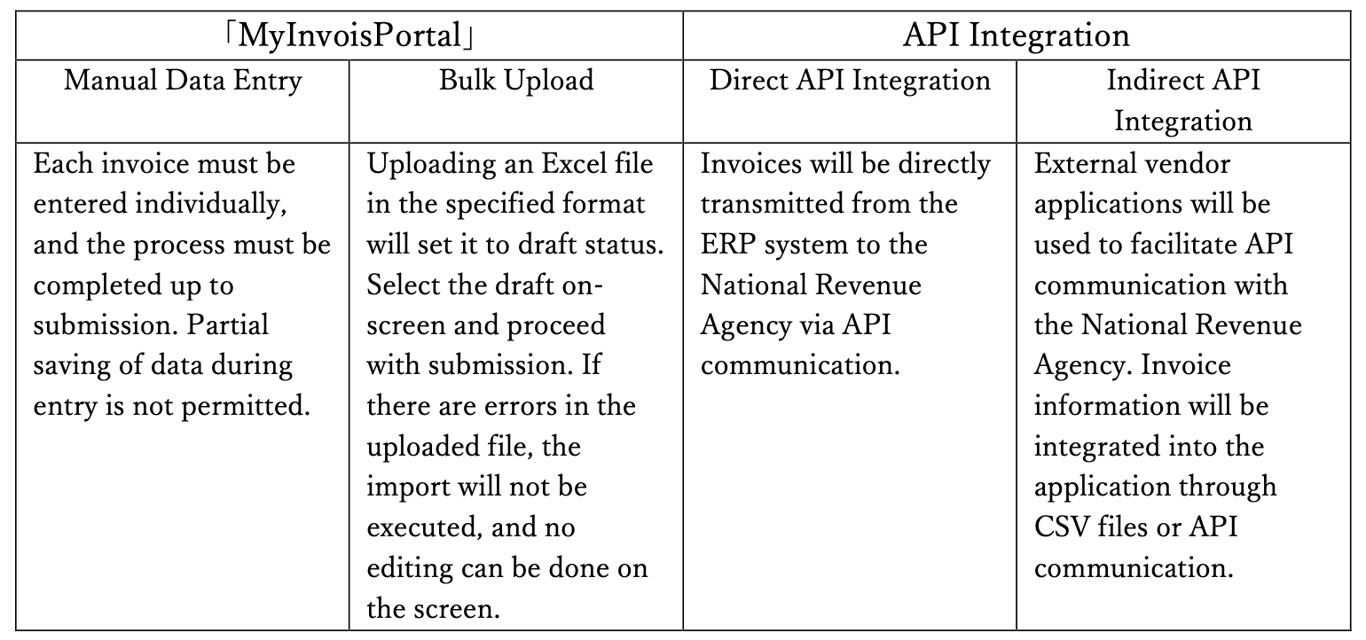
There are two primary methods for businesses to authenticate invoices with the tax authority. The first one is by manual submission via MyInvoisPortal, the online portal provided by the Malaysian tax authority. The second one is by API linking MyInvoisPortal with the company’s existing invoice system.
- Multibook e-Invoice compliance features
Multibook has developed a standard file output function that enables batch uploads to MyInvoisPortal. The required upload format consists of 11 sheets, which can be time-consuming when filled manually. By utilizing multibook, businesses can submit authentication requests in bulk, improving operational efficiency, reducing processing time, and minimizing errors.
Multibook remains committed to adapting to regulatory requirements and tax law updates in various countries. Our mission is to make the challenge of international business management more accessible and easier, to “Empower your potential” .
- Overview of Global Cloud ERP “multibook”
Multibook is a cloud-based ERP designed for overseas business operations, prioritizing speed in implementation, processing, and issue resolution. Supporting 12 languages, multi-currency transactions, and multiple account books, it seamlessly integrates business locations worldwide. Currently it has been adopted by over 500 companies across 33 countries, spanning industries such as manufacturing, trading, food & beverage, and construction, catering to both listed and non-listed enterprises.
Key Features: Accounting, logistics, fixed asset management, IFRS lease asset management, expense reimbursement, management cockpit, business process outsourcing cockpit, external integration (e.g., consolidated accounting, warehouse management)
Service: multibook
Website: https://en.www.multibook.jp/
12 Supported Languages: Japanese, English, Thai, Vietnamese, Korean, Burmese, German, French, Spanish, Traditional Chinese, Simplified Chinese and Indonesian.
- Company Overview
Company name: Multibook Limited
CEO: Tadaaki Murayama
Established: September 2000
Headquarters: NMF Gotanda Ekimae Building 5F, 1-1-8 Nishi-Gotanda, Shinagawa-ku, Tokyo, Japan
Overseas offices: Singapore, Thailand, Philippines
Business description: Planning, development and provision of global cloud ERP services, including “multibook.”
by | Mar 7, 2025 | Business
XPRESS Super App is an innovative multi-transport ride-hailing platform in the Philippines that empowers seniors to embrace an active second life. Inspired by Japan’s high senior employment rates, the app offers user-friendly training and design, along with BYD-backed Hybrid/EV loans at 0% commission during a transition period. The Negosyo Program and exclusive financing provide safe, sustainable mobility, with every booking insured for riders and drivers, ensuring reliable transportation solutions daily.
Manila, Philippines – XPRESS Super App, the country’s newest multi-transport ride-hailing platform, is redefining retirement by inviting senior citizens to embrace a vibrant “2nd life” after their careers. Inspired by Japan’s progressive employment model, a recent report by the Japan Business Federation revealed that in 2022, the employment rate for individuals aged 60 and older reached 25.2%, significantly higher than in the United States (18.6%) and the United Kingdom (10.9%). This encouraging data has fueled XPRESS’s mission to ensure that retirement is a time of purpose and renewal.
Designed with simplicity in mind, the XPRESS app features large, easy-to-read icons, and the company provides smartphones along with personalized training for those unfamiliar with modern technology. “We believe everyone deserves a chance to stay active and engaged,” an XPRESS spokesperson stated.

In a groundbreaking collaboration with BYD, XPRESS offers drivers the opportunity to avail Hybrid and EV loans, making sustainable vehicle ownership more accessible. During a limited-time transition period, drivers using electric EV or hybrid vehicles benefit from a 0% commission program, allowing them to maximize earnings while supporting eco-friendly transportation.
Furthering its commitment to inclusivity, XPRESS has introduced the Negosyo Program in partnership with Cebuana Lhuillier. This initiative provides exclusive financing options for driver partners across Metro Manila and key cities nationwide like Bataan, removing barriers to EV adoption.

XPRESS also addresses driver shortages during rush hours by welcoming both senior riders and drivers. With specific age requirements for 2-wheel Moto Taxis (20-60) and 4-wheel Car Taxis (20-65), additional doctor’s fit-to-drive certification for riders or drivers aged 60-65, and an active professional Philippine driver’s license, XPRESS is paving the way for a more inclusive, sustainable future. Every active booking is insured for both the rider/driver and their passenger to ensure top-notch coverage.

For more details, visit www.xpress.ph and follow XPRESS on Facebook, Instagram, and TikTok @XpressPhilippines or e-mail in**@****ss.ph.
by | Mar 7, 2025 | Business
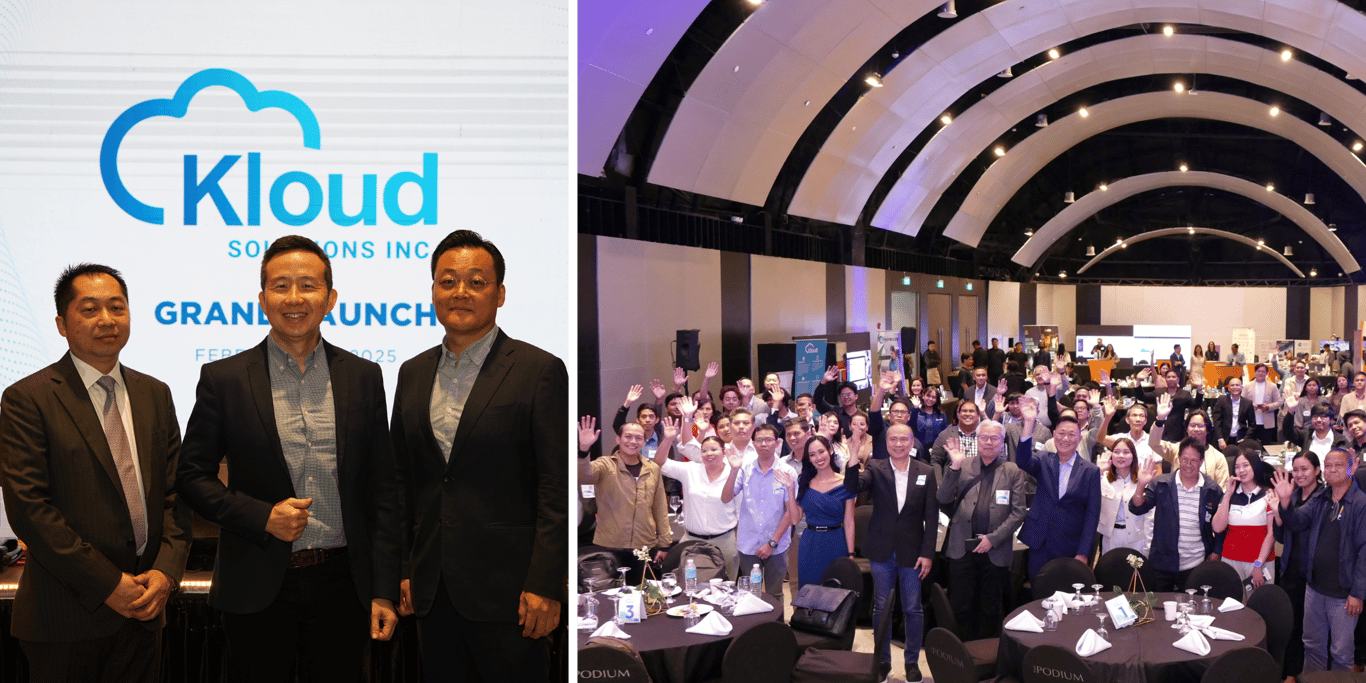
Manila, Philippines – February 26, 2025 – The Kloud Solutions Inc. Launch event was a groundbreaking moment in the Philippine IT and cloud computing industry, marking a new era in telecommunications and business solutions. Among the key highlights of the event was the presentation of OneSuite Business by Mary Olmstead, an emerging leader in IT and cloud communications, who introduced the cutting-edge virtual PBX system designed to revolutionize business communications for solopreneurs, small businesses, and remote teams.
Mary Olmstead: Pioneering Smart Business Communication Solutions and AI Advocacy
Mary Olmstead, a passionate advocate for innovative and cost-effective IT solutions, took center stage to introduce OneSuite Business, an industry-leading pay-as-you-go virtual PBX that empowers professionals, business owners, and remote teams with seamless communication solutions. With her expertise in IT and business communication, Olmstead highlighted how OneSuite Business offers unparalleled convenience for those needing a dedicated US business number while staying in the Philippines for business, vacation, or leisure activities.
OneSuite Business: A Game-Changer for Business Owners, Remote Professionals, and Travelers
Since its inception in 1999, OneSuite has been a pioneer in prepaid integrated telecom services, and with the evolution of remote work and global business operations, OneSuite Business was designed as an upgraded, simplified, and cost-efficient solution tailored for today’s professionals.
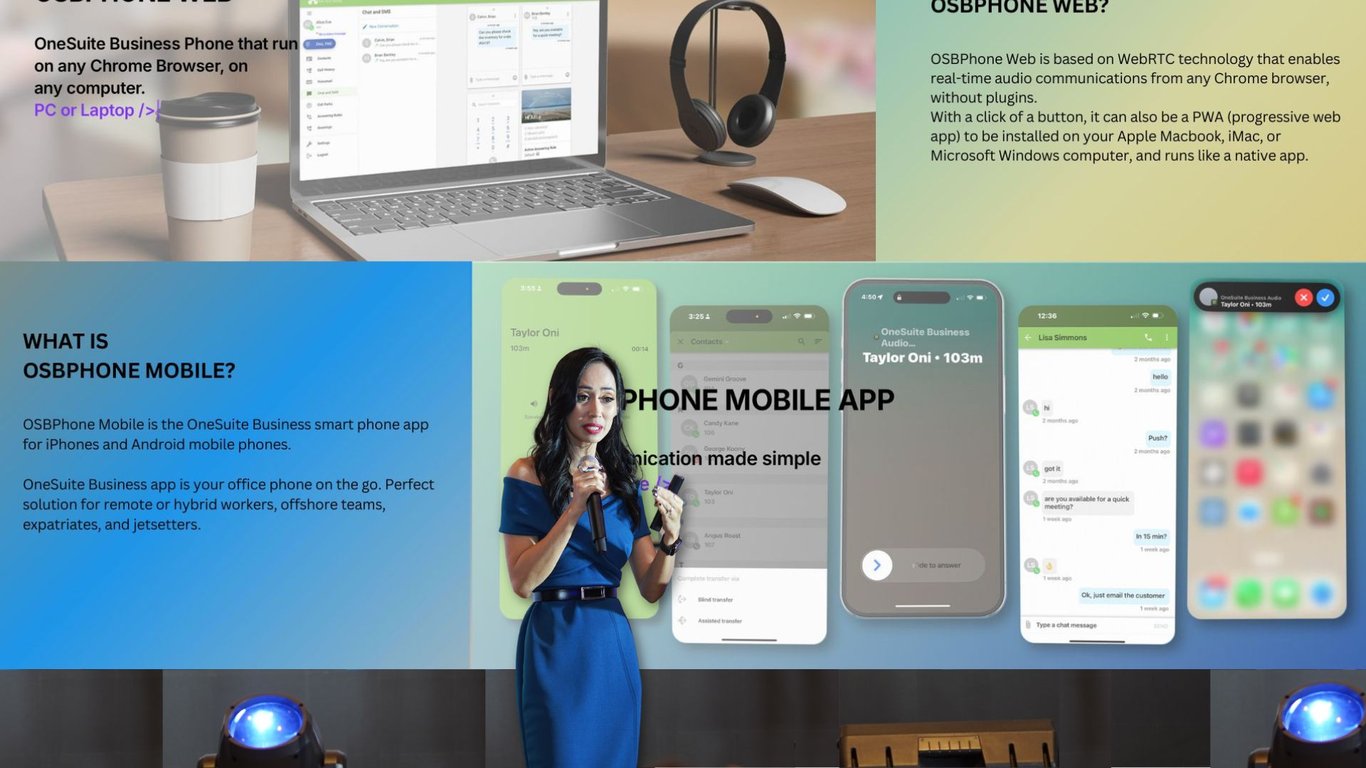
Key benefits of OneSuite Business include:
✔ Dedicated Business Number: Stay connected with a US business number wherever you go.
✔ Auto Attendant & IVR: Set up professional call routing to ensure calls reach the right place.
✔ Caller ID Protection: Keep personal and business communications separate while maintaining professionalism.
✔ Receive 2FA & OTP Verification Codes: A secure solution for authentication while traveling abroad.
✔ Scalability for Teams: A flexible virtual phone system for solopreneurs, startups, and growing businesses.
✔ Pay-as-you-go Pricing: Only pay for what you use, making it an affordable option for businesses of all sizes.
✔ Multi-Device & Remote Access: Make and receive calls or send SMS from anywhere in the world via the OneSuite Business App or thru the website.
On <b>February 26, 2025</b>, at the<b> Kloud Solutions Launch</b>, Olmstead had the opportunity to showcase how OneSuite Business can empower professionals with seamless communication solutions.<i></i>
Mary Olmstead emphasized that OneSuite Business is the perfect solution for Filipinos working remotely, managing an international business, or maintaining a presence in North America without incurring expensive roaming or international calling charges. Additionally, OneSuite Business is an ideal choice for U.S. tourists traveling to the Philippines or anywhere else in the world for business, work, or leisure activities. With its cloud-based IPPBX service, OneSuite Business ensures that travelers can maintain seamless communication as if they never left the U.S.This means they can receive and make calls with a dedicated U.S. number, send and receive SMS, and manage business operations without the hassle of costly international fees or unreliable roaming services. Whether in Southeast Asia, Europe, or anywhere else, OneSuite Business provides uninterrupted connectivity, giving travelers the flexibility and convenience of a professional business phone system wherever they go.
A Strategic Moment in the IT Industry
The Kloud Solutions Inc. Launch event was a testament to the growing demand for locally owned, sovereign cloud computing and telecom solutions in the Philippines. As SkyLab’s FusionFlow Cloud Service Platform expands its reach into the region, the partnership between OneSuite Business and Kloud Solutions Inc. underscores the importance of cutting-edge cloud-based communication solutions tailored for modern business needs.
Olmstead’s presentation highlighted the shifting landscape of business communication, ensuring small businesses, entrepreneurs, and remote professionals have the right tools to stay connected, work efficiently, and grow their businesses seamlessly.
Building a Name in the IT Industry
Mary Olmstead is set on making an impact in the IT and cloud solutions space. With her expertise and strategic vision, she aims to continue advocating for smart, affordable, and efficient business communication tools, as well as the integration of AI to drive digital transformation. Her presentation at the Kloud Solutions Inc. launch is just the beginning of her journey toward becoming a recognized leader in IT, AI, and telecom innovations.
For more information about OneSuite Business and how it can help your business stay connected while in the Philippines, visit www.onesuitebusiness.com or contact Mary Joy Custodio-Olmstead at ma***********@**********on.com.
by | Mar 7, 2025 | Business
Villgro Philippines, a gender-smart incubator supporting impact-driven enterprises, has partnered with the Southeast Asian Regional Center for Graduate Study and Research in Agriculture (SEARCA) to jointly run the Sustainable Agriculture and Food Security Enhancement (SAFE) Accelerator. This virtual accelerator program is designed to support high-potential enterprises developing regenerative, climate-resilient solutions that address food security and sustainable agriculture challenges in Southeast Asia. Applications will open in April 2025.
Villgro Philippines, a gender-smart incubator supporting impact-driven enterprises, has partnered with the Southeast Asian Regional Center for Graduate Study and Research in Agriculture (SEARCA) to jointly run the Sustainable Agriculture and Food Security Enhancement (SAFE) Accelerator. This virtual accelerator program is designed to support high-potential enterprises developing regenerative, climate-resilient solutions that address food security and sustainable agriculture challenges in Southeast Asia.
With agriculture serving as a backbone for millions across the region, the sector faces escalating threats from climate change, extreme weather events, unsustainable farming practices, and food waste. The SAFE Accelerator aims to cultivate market-driven, climate-resilient solutions that protect biodiversity, sustain farming communities, and improve food security.
“SEARCA, with its deep expertise in advancing climate-smart agriculture and agritech innovations, sees the SAFE Accelerator as a key initiative in fostering sustainable development across the region,” said Dr. Glenn Gregorio, SEARCA Center Director.
He added that the program will support four enterprises in Lao PDR, the Philippines, Timor-Leste, and Vietnam that integrate regenerative, nature-based solutions in their business models.
“The need of the hour is urgent transformative change to ensure food security – regenerative agriculture is at the heart of restoring ecosystems and ensuring our food systems are sustainable. The SAFE Accelerator will equip enterprises driving climate-friendly agribusinesses with coaching, tools, and networks to scale regenerative solutions that sustain both people and the planet.” said Priya Thachadi, Co-Founder and CEO of Villgro Philippines.
The four-month virtual accelerator program offers tailored capacity-building, mentorship from industry experts, hands-on workshops, gender-smart training, and self-paced investment readiness training. The program will conclude with an Impact Showcase, where selected enterprises will connect with potential investors and partners. Additionally, eligible enterprises may receive further funding opportunities through Villgro Philippines’s investor network.
“The SAFE Accelerator is an important step for empowering enterprises at the forefront of climate-smart agriculture, enabling them to scale solutions and the kind of innovations needed to reshape agriculture in Southeast Asia—driving both ecological restoration and long-term food security,” said Atty. Eric Reynoso, SEARCA Program Head for Emerging Innovation for Growth.
Applications will open in April 2025 for screening and joint evaluation by Villgro Philippines and SEARCA. Interested enterprises or partner organizations in Lao PDR, the Philippines, Timor-Leste, and Vietnam may reach out to the team at cl*****@****************es.org.
by | Mar 7, 2025 | Business
Are you considering investing in Indonesia? Understanding the process of establishing a Foreign Owned Company Limited Liability Company (PT PMA) is crucial for foreign investors looking to tap into Indonesia’s promising economic landscape. In this comprehensive guide, we’ll explore the requirements, corporate structure, and key considerations involved in setting up a PT PMA in Indonesia.
From understanding the legal framework to navigating restrictions on foreign ownership and minimum investment requirements, this article provides valuable insights to help you make informed decisions and navigate the complexities of investing in one of Southeast Asia’s largest economies. Whether you’re a seasoned investor or exploring new opportunities, this guide will equip you with the knowledge and tools needed to establish a successful presence in Indonesia’s thriving business environment.
Indonesia presents excellent investment prospects to foreigners because of its youthful and huge population, growing standard of living, wealth of natural resources, and inexpensive labor. As a result, Indonesia tends to see an increase in the realization of foreign direct investment (FDI) annually. This section addresses the establishment of Perseroan Terbatas Penanaman Modal Asing, often known as PT PMA, a limited liability company for foreign investments in Indonesia. It is the official organization that permits foreign investors to carry out business operations in Indonesia.
Indonesia, one of the largest growing nations, offers excellent economic prospects to foreigners. The Foreign-owned Limited Liability Company (PT Penanaman Modal Asing) requirements in Indonesia are important information for those of you who wish to begin growing your business there. Let’s just call it PT PMA for short.
PT PMA, as its name suggests, is a Limited Liability Company (PT) that operates under the regulations of Law Number 40 / 2007, which relates to limited liability companies (Company Law). This type of business might be partially or fully owned by foreign entities or individuals. It is also important to keep in mind that several economic areas in Indonesia are off-limits to international investment.
A foreign investment in Indonesia is defined as an investment activity carried out by a foreign investor with the intention of operating a business inside the borders of Indonesia, as per Law No. 25/2007 on Investment (New Investment Law). The PT PMA is the legal organization that permits a foreign individual, foreign entities, or foreign government agency to conduct business in Indonesia—that is, to create income streams and profits.
It is essential to emphasize that a number of Indonesian industries are either completely or partially off-limits to foreign investment. The Positive Investment List, which is maintained and updated often, is the resource you need to learn which industries accept foreign investment (BKPM). The list indicates the highest proportion of foreign ownership permitted in the event that a sector is partially closed to foreign investment. This implies that in order to conduct business in that specific industry, you will require an Indonesian partner.
Corporate Structure of a Foreign Owned Limited Liability Company (PMA)
A foreign owned limited liability corporation (PMA) has the following corporate structure:
Shareholders
Two must be present at minimum. The shareholders from Indonesia and/or abroad may be either natural persons or corporations.
Board of Directors
The PMA’s daily activities are overseen by the members of the board of directors. The corporation must have at least one director, who may be an Indonesian or a foreign national. A president director must be selected if the board of directors is composed of more than one director. Additionally, the president director may be an Indonesian or a foreign national.
Board of Commissioners
The commissioners’ job is to keep an eye and supervise the PMA’s board of directors. A president commissioner must be selected if the board of commissioners has more than one member, and the shareholder must choose at least one commissioner. Both foreign nationals and Indonesians may serve as commissioners and president commissioners.
The general meeting of shareholders appoints the members of the board of directors and board of commissioners. A notarial deed of appointment concludes their choice.
Important Things to Consider When Setting Up a PT PMA
Here are some major considerations you should make before deciding to open a PT PMA in Indonesia:
Owners of PT PMA shares:A PT or LLC needs two shareholders, at least one of whom must be a foreign national, in order to be considered as a foreign company.The Positive Investment List and the Business Sector:Indonesian government has opened up to be invested by foreigner. Most of the activities are open for foreign ownership based on the Positive Investment List Regulation. However, certain economic sectors (PT PMA) are totally off-limits to foreigners, while other sectors allow foreign ownership to be limited to up to 95%. You can do research using Indonesia’s Positive Investment List (Daftar Positif Investasi) to find the list of prohibited sectors.Registered Office Address:The address must be in the commercial area.Name of the Company:The name shall consist of 3 words. The words cannot contain the words which have a meaning as Corporation, Company, Limited Liability, Incorporation, or any other name which has a similar meaning. Example of Indonesian company names: PT Tata Boga Indonesia, PT Jaya Success Indonesia. After you select the name, you must check whether the name is available to be used and not similar with other registered Indonesian company.Plan for Minimum Investment and Paid-Up Capital:The amount of money invested by a company’s shareholders is known as a paid up capital. The daily operating costs will subsequently be covered by these paid-up capitals. The Investment Coordinating Board, or BKPM, in Indonesia established a minimum capital requirement of at least IDR 10 billion, or equivalent approximately about USD 700,000. This amount is equivalent to the requirements for a Large Enterprise Local LLC (PT).
Summary
Understanding the intricacies of establishing a Foreign Owned Company Limited Liability Company (PT PMA) in Indonesia is crucial for investors looking to tap into the country’s promising economic prospects. With its youthful population, abundant natural resources, and growing standard of living, Indonesia offers a fertile ground for business growth. However, navigating the legal and regulatory framework, including compliance with the Negative Investment List and understanding the corporate structure requirements, is essential for success.
By grasping the requirements and considerations outlined in this guide, investors can make informed decisions and maximize their chances of establishing a successful presence in Indonesia’s dynamic market. Thus, knowing the ins and outs of setting up a PT PMA is not only important but also imperative for those looking to capitalize on Indonesia’s economic potential and contribute to its ongoing development.
Looking to dive into Indonesia’s vibrant business landscape? Let us assist you in navigating the complexities of setting up your business entity in this dynamic market. Kickstart your entrepreneurial journey today! Click here to begin.
by | Mar 6, 2025 | Business
Trump’s Strategic Crypto Reserve prioritizes XRP, SOL, and ADA over Bitcoin and Ethereum. Discover the reasons behind this bold move, its economic and political implications, and how it impacts the crypto market.
Since his return to the White House, President Donald Trump has taken a new approach to the cryptocurrency industry, focusing on clearer regulations and the establishment of a Strategic Crypto Reserve.
However, what has sparked widespread interest is his preference for certain digital assets—XRP, Solana (SOL), and Cardano (ADA)—over more established cryptocurrencies like Bitcoin (BTC) and Ethereum (ETH).
Why Trump Supports XRP, SOL, and ADA
Ki Young Ju, CEO of CryptoQuant, explains that the Trump administration backs only digital assets that align with U.S. national interests. This strategic selection aims to bolster America’s financial dominance on the global stage.
According to a Zycrypto report, Young Ju noted on the platform X that the crypto industry has become a powerful tool for the U.S. to strengthen its financial influence worldwide.
By supporting these particular assets, the administration seeks to attract foreign capital into the U.S. crypto market, giving the country a competitive advantage.
Trump has instructed the Presidential Working Group to continue developing the Strategic Crypto Reserve with XRP, SOL, and ADA as key assets. Initially, Bitcoin and Ethereum were excluded, but they were later added.
However, Young Ju argues that this inclusion does not necessarily benefit BTC and ETH, as both are considered more neutral on a global scale.
Cryptocurrency as America’s Economic Weapon
Trump’s policy suggests that digital assets aligned with U.S. interests will receive regulatory protection and support. In contrast, neutral or unfavorable assets could face stricter regulations.
This shift is evident in more lenient policies toward projects that align with the administration’s agenda, such as meme coins themed around Trump.
Young Ju remarked, “Now, if something benefits Trump and supports U.S. national interests, it is no longer considered illegal.” This statement underscores the administration’s willingness to back crypto projects that follow government policies.
Community Reactions to Trump’s Crypto Policies
Despite debates about the selection of assets for the Strategic Crypto Reserve, many crypto investors welcome this policy shift. It signifies greater acceptance of the industry in the U.S. and presents opportunities to attract new capital into the market.
Since taking office again, Trump has implemented strategic crypto policies, including establishing a specialized task force to develop clearer regulations.
Some U.S. states are also drafting legislation to create Strategic Bitcoin Reserves, marking a significant shift from previous administrations’ restrictive stance on cryptocurrencies.
Understanding Trump’s Crypto Picks
In a Truth Social post, Trump confirmed that his executive order on digital assets would create a national stockpile of XRP, SOL, and ADA. This announcement surprised many traders, causing a price surge for these tokens.
Later, Trump added Bitcoin and Ethereum to the reserve. Below is a breakdown of the selected cryptocurrencies:
1. XRP
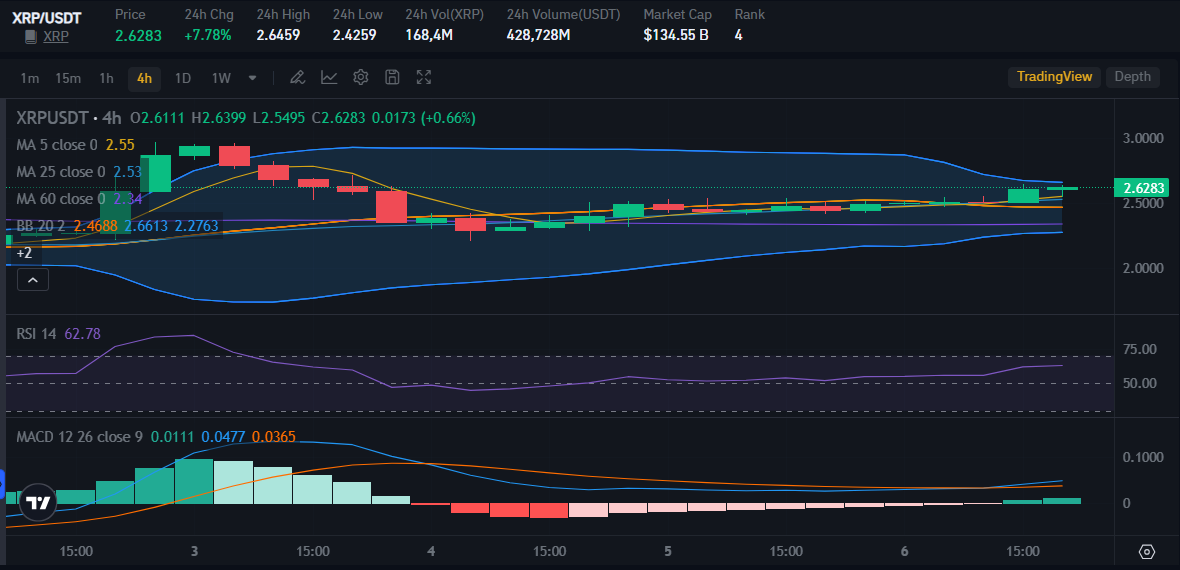
Created by U.S.-based Ripple, XRP is the world’s third-largest cryptocurrency, with $140 billion in circulation and a price of approximately $2.40 per token. Ripple promotes XRP as a faster and cheaper alternative for global fund transfers compared to Bitcoin.
Despite its volatility, XRP has gained regulatory support, with Ripple’s President Monica Long stating that the company’s political action committee (PAC) supports candidates advocating pro-crypto regulations.
2. Solana (SOL)
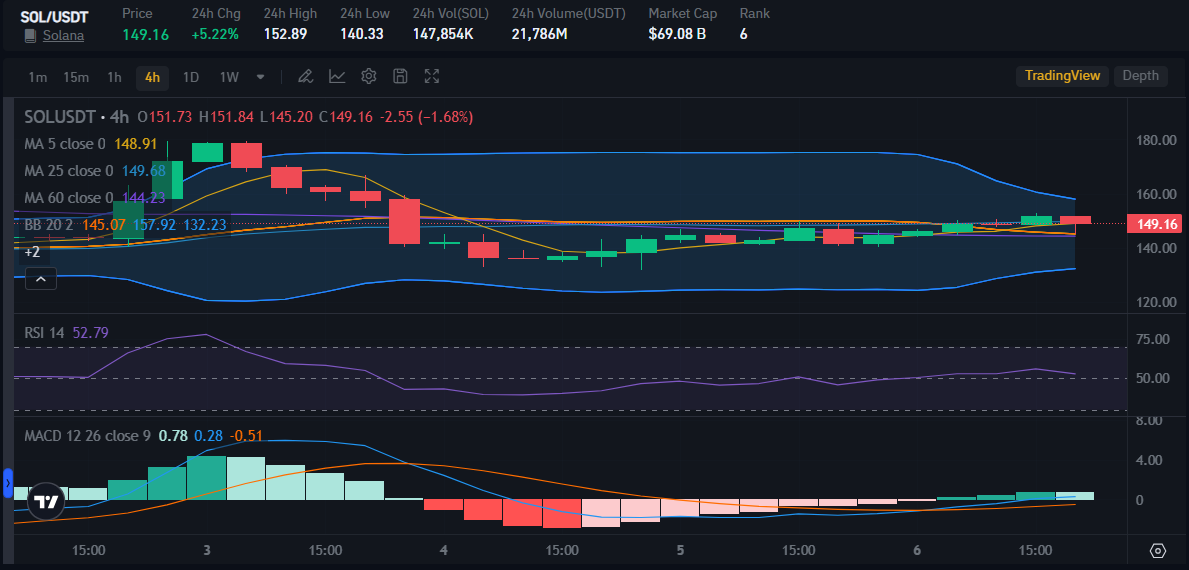
SOL is the token powering the Solana blockchain, often used for launching meme coins—including Trump’s own cryptocurrency, introduced in January 2025. With $73 billion worth of tokens in circulation, SOL ranks as the sixth-largest cryptocurrency.
However, it has experienced significant volatility, particularly due to its past association with former FTX CEO Sam Bankman-Fried. Despite this, Solana remains a strong Ethereum competitor, especially in the NFT market.
3. Cardano (ADA)

Founded in 2015 by Ethereum co-founder Charles Hoskinson, Cardano (ADA) has $31.4 billion in circulation, making it the eighth-largest cryptocurrency.
ADA experienced a substantial price increase of over 70% following Trump’s announcement. Cardano’s decentralized structure includes five key entities, including the Switzerland-based Cardano Foundation and the for-profit company Emurgo.
4. Bitcoin (BTC)
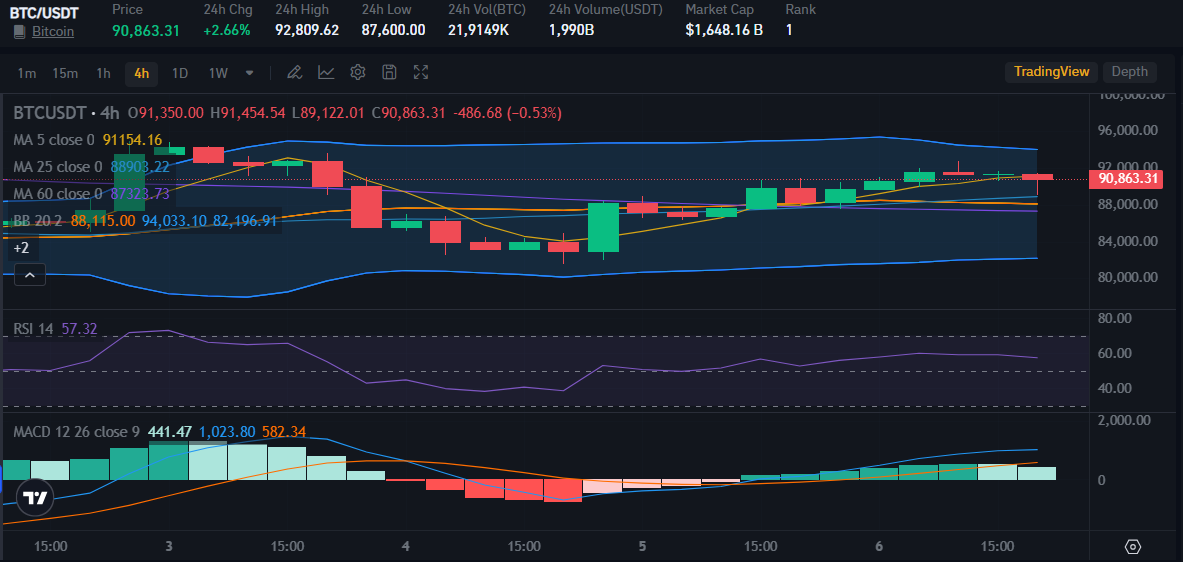
As the world’s first and most valuable cryptocurrency, Bitcoin has a market cap exceeding $1.7 trillion, accounting for over half of the $3 trillion digital asset market. The SEC’s approval of Bitcoin ETFs in January 2024 and Trump’s pro-crypto stance have contributed to its price surge.
However, Bitcoin’s decentralized nature means it lacks direct political alignment, making its initial omission from the Strategic Crypto Reserve surprising.
5. Ethereum (ETH)
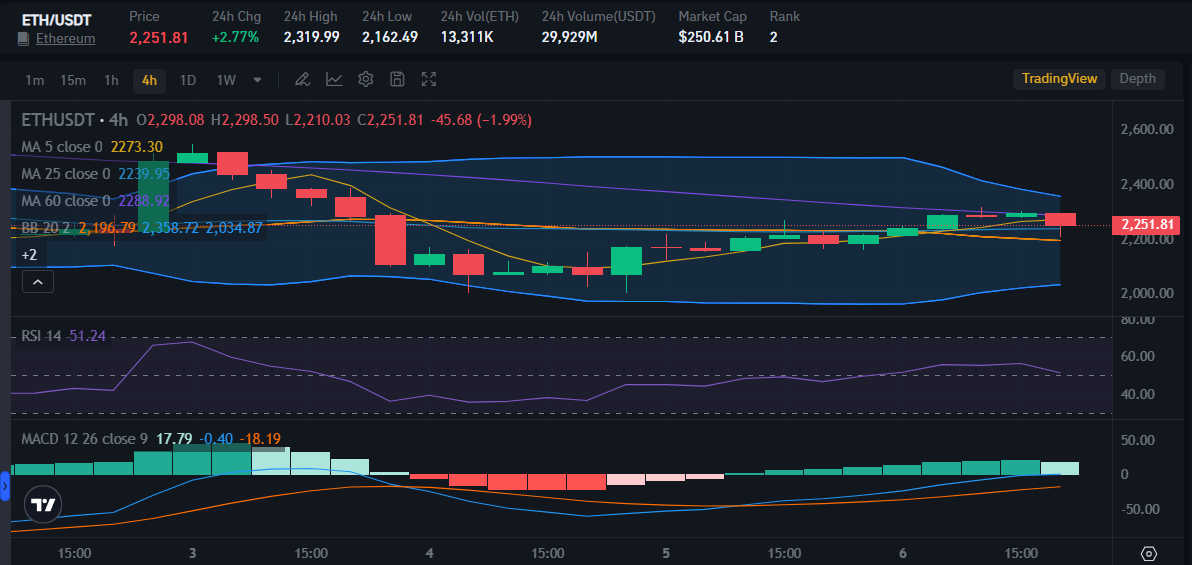
Ethereum powers decentralized finance (DeFi) applications and smart contracts. Founded by Vitalik Buterin, it remains the second-largest cryptocurrency.
Trump-affiliated company World Liberty Financial has issued digital tokens on Ethereum, raising over $500 million. The Ethereum blockchain continues to play a major role in reshaping global finance.
The Political and Economic Implications
Trump’s crypto reserve announcement has generated discussions about his administration’s broader economic strategy. The initial exclusion of Bitcoin raised concerns among BTC proponents who view it as the cornerstone of decentralized finance.
Some analysts argue that prioritizing XRP, SOL, and ADA over Bitcoin and Ethereum could introduce volatility and political risk.
David Sacks, Trump’s Crypto Czar, and Bo Hines, Executive Director of the initiative, have faced criticism for their handling of crypto policy.
Critics point to Trump’s controversial meme coin launches ($TRUMP and $MELANIA) and argue that the administration lacks deep expertise in digital asset regulation.
Potential Risks and Future Developments
The inclusion of relatively illiquid assets like XRP, SOL, and ADA in the Strategic Crypto Reserve could pose financial risks. Bitcoin’s daily trading volume far exceeds that of these tokens, making it the most stable choice for a national reserve.
Solana has experienced periodic network outages, and XRP’s centralized governance has drawn scrutiny.
If any of these tokens collapse, the administration may face political fallout, damaging trust in government-backed crypto policies. The Terra (LUNA) crash in 2022 and the FTX scandal serve as reminders of the volatility and regulatory risks in the digital asset market.
The Road Ahead: Bitcoin’s Rising Influence
Despite the focus on XRP, SOL, and ADA, Bitcoin remains the most dominant digital asset. Trump’s policies, while seemingly favoring certain tokens, have indirectly boosted Bitcoin’s appeal as the most liquid and decentralized cryptocurrency.
Following Trump’s announcement, Bitcoin’s price surged by approximately 7%, adding nearly $100 billion to its market cap.
The upcoming White House Crypto Summit, led by Sacks and Hines, will provide further clarity on the administration’s long-term digital asset strategy. If Trump pivots toward prioritizing Bitcoin’s security and liquidity, the U.S. could emerge as a leader in the digital financial revolution.
Conclusion
Trump’s approach to cryptocurrency represents a paradigm shift in U.S. digital asset policy. While the Strategic Crypto Reserve prioritizes XRP, SOL, and ADA, Bitcoin remains the most significant player in the market.
The administration’s regulatory stance will shape the future of crypto adoption in the U.S., influencing global financial markets. Whether this initiative succeeds or encounters regulatory hurdles remains to be seen, but one thing is clear—cryptocurrency is now firmly on the national agenda.
by | Mar 6, 2025 | Business
Discover the latest XRP price prediction for 2025-2027. Can XRP still deliver big returns? Explore key factors like legal developments, banking partnerships, whale activity, and market trends to determine its future potential. Read more now!
Have you checked the XRP price prediction recently and wondered if it still has the potential for big gains? You’re not alone. XRP gained popularity due to its promise of instant, low-cost international money transfers, attracting banks and financial institutions worldwide.
However, with regulatory challenges and increasing competition, investors now question whether XRP can reclaim its former glory or if its time has passed.
So, what does the future hold for XRP? Let’s take a deep dive into its price history, predictions for 2025 and beyond, and the key factors influencing its trajectory.
XRP Price History: A Quick Look Back
Understanding XRP’s past performance is crucial for predicting its future. XRP hit an all-time high (ATH) of $3.84 in January 2018 during the crypto boom. However, its price dropped significantly to around $0.20 following the SEC lawsuit against Ripple in December 2020.
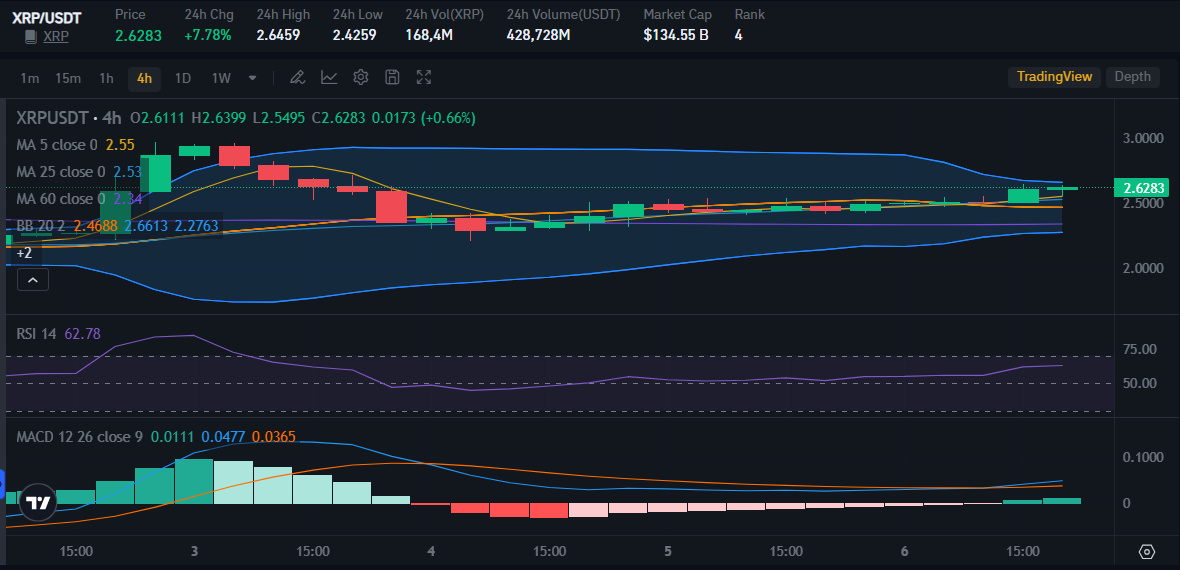
Ripple later secured legal victories, which restored investor confidence. By July 2023, XRP had rebounded to around $0.80. As of March 6th 2025, XRP is trading around $2.6, reflecting investor caution amid ongoing regulatory uncertainty.
XRP Price Prediction for 2025: A Detailed Outlook
Predicting XRP’s future price is challenging, but we can make educated guesses based on legal developments, partnerships, adoption rates, and competition.
Positive Factors for XRP in 2025
1. Legal Clarity: A favorable settlement in Ripple’s SEC lawsuit could trigger a significant price surge. If Ripple gains full regulatory approval, XRP could surpass $1.50 by late 2025.
2. Banking Partnerships: Ripple’s existing partnerships with major banks like Santander and Bank of America may expand, pushing XRP’s price towards $2.00.
3. Increasing Adoption: XRP’s efficient cross-border payment technology is well-suited for international transactions, particularly in Asia. Wider adoption could drive prices higher.
Potential Risks and Challenges
- Regulatory Uncertainty: Unfavorable legal developments could stall XRP’s growth, keeping it under $1.00.
- Competition: Cryptos like Stellar (XLM) offer similar services. Strong competition could limit XRP’s upside potential, capping its price below $1.50.
XRP Price Range in 2025
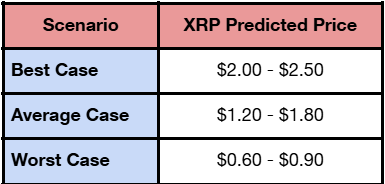
Considering Ripple’s resilience and growing adoption, XRP is likely to trade around $1.50 by late 2025—potentially offering a 200% gain from today’s price.
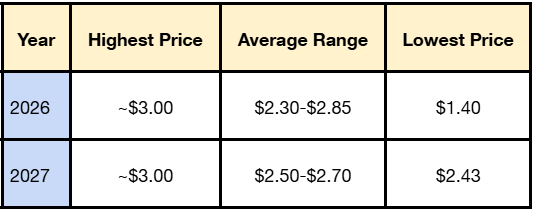
Short-Term XRP Crypto Price Predictions: 2026 and 2027
1. XRP in 2026
– Early 2026: Strong start, with XRP reaching $2.83 in January and peaking at $3.04 in March.
– Mid-2026: Consolidation phase between $2.30 and $2.85 as investors secure profits.
– Late 2026: Prices stabilize around $2.35 to $2.56, indicating steady investor confidence.
2. Investor Tips for 2026
- Consider taking profits when XRP peaks at around $3.00.
-
Monitor regulatory developments closely.
-
Be prepared for volatility, offering multiple entry and exit points.
3. XRP in 2027
– Early 2027 (Jan-Apr): XRP hovers around $2.50, indicating cautious investor sentiment.
– Mid-2027 (May-Aug): A bullish rally could push XRP to $2.95.
– Late 2027 (Sep-Dec): Stability returns, with XRP trading between $2.53 and $2.71.
Whale Activity and Market Sentiment
Recent whale activity suggests strong confidence in XRP’s long-term potential. Over the past week, whale addresses holding between 100 million and 1 billion XRP added 1.34 billion tokens, worth over $3.26 billion.
Despite an 18% price crash, whales continued accumulating rather than selling, signaling bullish sentiment.
Additionally, XRP’s Price DAA Divergence, a market indicator, has issued a buy signal, suggesting potential price increases. XRP also remains above its $2.33 support level, having posted a 37% price increase after a weekend of high volatility.
The Impact of Ripple’s Strategy and Market Developments
Ripple’s ongoing legal battle with the SEC remains a critical factor for XRP’s future. A favorable ruling could trigger institutional adoption, while further regulatory challenges may hinder growth.
The Trump Factor and Market Volatility
U.S. President Donald Trump’s proposal to create a national crypto reserve—including XRP—boosted its price to $2.99. However, the rally was short-lived, with XRP falling back to $2.50 due to market sell-offs.
Meanwhile, South Korean traders have been aggressively accumulating XRP, with Upbit now holding “twice as much” XRP as Binance. Upbit accounts for over 14% of global XRP trading volume, reinforcing South Korea’s growing influence in the market.
Ripple’s Controversial XRP Sales and Market Manipulation Concerns
Ripple’s Chief Technology Officer, David Schwartz, defended the company’s right to sell XRP tokens, sparking debate over market manipulation concerns.
Meanwhile, a dormant wallet containing over $7 billion in XRP—linked to Ripple co-founder Chris Larsen—has raised further questions.
Recent transactions indicate at least $109 million in XRP was moved to exchanges in early 2025, fueling speculation over Ripple’s financial strategy.
Technical Analysis: XRP Price Levels to Watch
1. Support Level: $2.33
2. Key Resistance Levels: $2.70 and $2.95
3. Breakout Potential: If XRP surpasses $2.70, it could target $3.50 in the coming weeks.
In the BTC trading pair, XRP is recovering towards the 3400 SAT resistance level. If it breaks through, a further rally could follow.
Conclusion: Is XRP Still a Good Investment?
Despite past setbacks, XRP remains one of the most actively traded cryptocurrencies. Its legal battles, adoption by financial institutions, and whale accumulation indicate strong long-term potential. However, risks such as regulatory uncertainty and market competition remain significant.
For investors, XRP offers potential upside, particularly if Ripple secures a favorable SEC ruling and expands partnerships. A 200% gain by late 2025 is possible, making XRP attractive for those seeking steady, long-term returns.
However, volatility will remain high, so investors should stay informed and adjust their strategies accordingly.
by | Mar 6, 2025 | Business
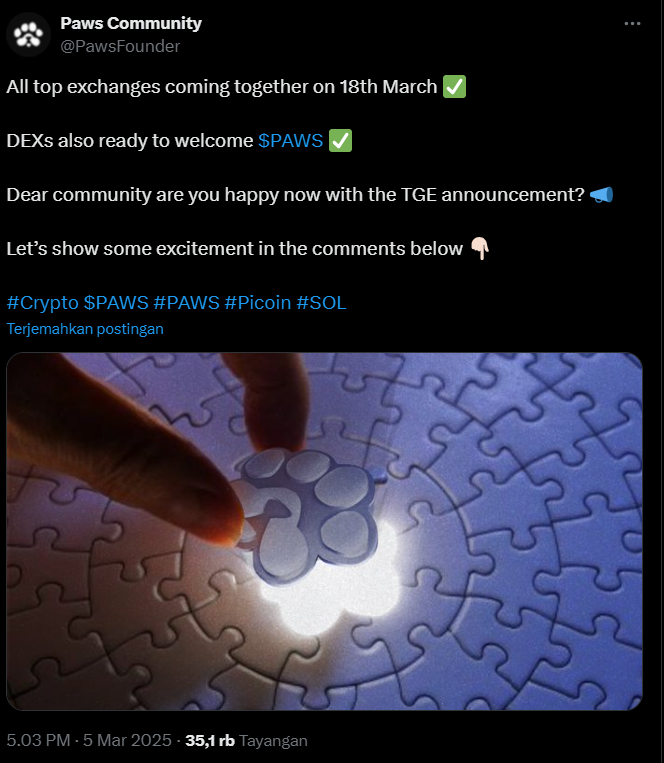
PAWS is set for its highly anticipated exchange listing on March 18, 2025! Learn about its origins, Solana migration, tokenomics, airdrop details, and price predictions. Will PAWS be the next big Web3 success story? Read now!
The cryptocurrency market is excited as PAWS, a promising new token born from a Telegram mini-app, officially announces its Token Generation Event (TGE) and exchange listing.
Scheduled for March 18, 2025, the event is expected to mark a major milestone for the project and its rapidly growing community.
The Rise of PAWS: From Telegram Mini-App to Web3 Powerhouse
Initially developed as a mini-app within Telegram, PAWS quickly gained traction among users, amassing over 85 million onboarded users and 50 million monthly active users (MAU). However, regulatory shifts within Telegram, specifically the centralization of its ecosystem under The Open Network (TON), prompted PAWS to take a new direction.
To maintain its decentralized ethos, PAWS transitioned to Solana, leveraging its robust blockchain infrastructure to expand accessibility, scalability, and security.
This strategic migration has already yielded impressive results. Within just 48 hours of integrating with Phantom Wallet, PAWS witnessed over nine million downloads, showcasing its immense popularity and potential in the decentralized finance (DeFi) landscape.
PAWS Tokenomics and Airdrop Strategy

In preparation for its TGE, PAWS has released crucial details regarding its tokenomics and distribution strategy:
– Total Supply: 100 billion PAWS tokens
– Airdrop Allocation:
- 62.5% distributed to PAWS app users for current and future incentives
- 7.5% reserved for Solana OG communities
– Exchange Listings: The token will be available on both decentralized exchanges (DEX) and centralized exchanges (CEX) from day one
– Token Claim: Eligible users can claim their PAWS tokens via the official website
The emphasis on community-driven tokenomics underscores PAWS’ commitment to fostering organic growth, a stark contrast to projects that rely heavily on venture capital funding and traditional marketing strategies.
Speculation on Exchange Listings and Price Predictions
With the official listing date confirmed, speculation is mounting over which major exchanges will support PAWS trading.
While the PAWS team has yet to release an official statement regarding its listing venues, cryptic hints—including recurring mentions of “BBB”—have led many to believe that Binance, Bybit, and Bitget could be among the first to list the token.
Other prominent exchanges such as KuCoin, MEXC, Gate.io, and OKX are also being closely monitored.
Price predictions for PAWS are equally intriguing. Analysts estimate an initial trading range between $0.009 and $0.010, drawing comparisons to similar meme-based tokens such as Hamster Kombat ($HMSTR), which debuted with a comparable total supply.
If PAWS sustains its current momentum and successfully executes its roadmap, its valuation could rise to $0.030–$0.050 in the mid-term. A potential Binance listing could catalyze further price appreciation, with some experts speculating that PAWS could eventually reach the $1 mark.
The PAWS Airdrop: How to Participate
The PAWS airdrop program is one of the most anticipated in the crypto space. Eligible users who actively engaged with the PAWS mini-app before December 30, 2024, will receive PAWS tokens. To qualify, participants must have:
- Frequently used the PAWS mini-app on Telegram
-
Complete in-app tasks to earn PAWS points
-
Linked their TON wallet before the snapshot date
While the exact distribution timeline has yet to be finalized, the PAWS team continues to provide regular updates to ensure a seamless token claim process.
Conclusion: Is PAWS Truly a New Web3 Success Story?
With its bold move to Solana and its commitment to community-driven growth, PAWS is positioning itself as a formidable force in the cryptocurrency landscape.
Drawing inspiration from successful Web3 projects such as Pudgy Penguins, Berachain, and Doodles, PAWS aims to transcend its origins as a meme coin and become a major player in the decentralized ecosystem.
As the March 18, 2025, listing date approaches, all eyes are on PAWS and its potential to disrupt the market. Whether it can live up to its high expectations remains to be seen, but one thing is certain—PAWS is a project that cannot be ignored.
by | Mar 6, 2025 | Business
Metro Finance, one of Australia’s leading independent non-bank lenders for asset finance, has followed on from its recent consumer survey findings, sharing responses from Australian businesses and revealing a range of impacts as cost of living pressures continue to bite consumer spending.
The business survey, responded to by 1,000 Australian employed and self-employed workers, indicates a spread of both economic optimism and belt-tightening.
When it came to business spending, respondents earmarked two primary costs for their own business or their employer’s in 2025: 39.9 per cent cited human resources, which includes training and benefits programs, as a key cost for the year ahead, while 42.3 identified supplier costs of producing goods and services being the main consideration.
Despite the expectation that goods and services will cost more in 2025 (a sentiment shared with recent respondents of Metro’s consumer survey), 66.4 per cent of respondents did not think their business would seek financing in 2025. This figure, however, contrasts with the overwhelming majority of those surveyed who remain confident of securing business finance if needed, at 72.1 per cent.
42.3 per cent of respondents also suspected the need to improve business cashflow would be the main motivator to seek financing in 2025.
Metro Finance CEO, David Albest, commented on the latest trends in the business survey.
“As we saw recently with the results of Metro’s 2025 consumer survey, there is a general sense of the market cautiousness, as businesses and their customers both take a hard look at their budgets, and make prudent decisions based on some uncertain market conditions,” David said.
From an operational point-of-view, increasing revenue (32.1 per cent), improving cashflow (29.7 per cent) and reducing debt (27 per cent) were the primary business goals for FY25, with respondents’ businesses reacting to inflation, higher interest rates and slower consumer spending. 38.7 per cent of all respondents also acknowledged that their business was cutting costs in a bid to improve net profit.
Interestingly, while saving costs and conserving budgets were recurrent themes with those surveyed, sustainability and initiatives to tackle waste and energy consumption are appearing to be adopted by businesses around the country.
39.6 per cent identified recycling as a way businesses were including sustainability in their operations, while 27.6 per cent flagged solar energy technology.
19.6 per cent of survey respondents also acknowledged low or zero emission vehicles as a feature of businesses’ sustainability efforts.
David Hall, National Novated Manager at Metro, commented on the proliferation of low and zero emission vehicles being provided to employees through salary packaging.
“Metro’s novated leasing offering is contuinuing to experience growth, with over 18,000 cars, of which 11,000 were low or zero-emission vehicles, being leased by employees through their employers in 2024,” David explained.
“What we’re seeing from a market perspective is novated leasing is an increasingly popular way for businesses to retain staff and incentivise high-performers, while at the same time helping employees’ household budgets save money by reducing their tax liability and providing consistency and predictability in their repayments. At a time of market volatility, this can been extremely beneficial for both sides of the fence,” David continued.
Investing in sustainability, either by adopting new processes and initiatives, or updating business assets, is also generating positive residual benefits for businesses in 2025: 35.7 per cent of respondents believed their business was well-respected in the community because of its sustainability efforts.
26.4 per cent cited customers seeing sustainable business as industry leaders, with 19.9 per cent also attributing greater B2B engagement because of their respective company’s sustainability initiatives. 16.4 per cent, however, believed that customers saw sustainable businesses as being more expensive than competitors.
Recently, Metro’s MetroEco green lending program received an additional $50 million funding commitment from the Clean Energy Finance Corporation (CEFC) – this new investment doubles the CEFC’s total commitment to $100 million, highlighting the strong demand from businesses ready to embrace sustainability in a number of different ways.
Since launching MetroEco in July 2024, Metro has supported over 4,000 electric vehicles hit the road across 26 different brands, along with funding energy-efficient equipment and battery technology — all made possible with competitive interest discounts for eligible green assets.
As a partner of Greenfleet, the Metro business offset 2,134 tonnes of carbon in 2024, and contributed $49,968 to sustainability efforts such as revegetating 547 hectares of land which included 460 hectares of protected koala habitat. Since joining Greenfleet in 2023, Metro has offset 4,015 tonnes of carbon, and contributed $80,815.
Following the trends: consumers watch their pennies
As businesses take a conservative approach to FY25, consumers are no-doubt influencing the current trend of belt-tightening; also identified in Metro’s Australia-wide consumer survey, which also saw 1,000 respondents take part.
Key findings of the Metro consumer survey (Jan 2025):
-
44 per cent of all respondents shop around for the best price on fuel, and will only buy on days where it is historically lower at the bowser
-
48.9 per cent of households surveyed said that saving money on energy utilities would be their main interest in upgrading their home’s technology
-
41.3 per cent said they would not currently purchase an electric vehicle (EV), with 41.5 per cent claiming that they do not consider EVs mobility to be durable, regardless of brand
-
29 per cent, however, indicated they would opt for an EV made by an established mainstream brand already selling internal combustion engine (ICE) vehicles in the market
-
66.2 per cent said they would consider either a plug-in or mild hybrid for their next vehicle
-
33.4 per cent, would like to save as much as possible and would consider a loan on an electric vehicle if the rate was cheaper
-
52.9 per cent cited concerns over petrol prices as being a key motivator for a hybrid vehicle purchase
-
33.7 per cent have recently established a new household budget
-
43.7 per cent said they would, or have already switched brands to more affordable options





You must be logged in to post a comment.