
by | Sep 3, 2024 | Business
Häfele Philippines Inc., an international provider of premium hardware and fittings for the built environment, is excited to announce its participation in the annual Hotel and Food Service Supplier Show. This prestigious event will take place from September 19-21 at the SMX Convention Center in Pasay City.

At the show, Häfele will showcase its extensive range of innovative products designed to enhance the functionality, aesthetics, and efficiency of hotels, restaurants, and other hospitality establishments. Visitors can explore a wide selection of high-quality hardware solutions, including sanitary fittings, mirrors, door hinges, locks and closers, sliding door systems for various applications, kitchen appliances tailored for hotels and restaurants, digital locksets, and innovative lighting solutions.
As a trusted partner to the hospitality industry, Häfele is committed to providing innovative and sustainable solutions that meet the evolving needs of its customers. With a focus on quality, durability, and design, Hafele’s products are designed to enhance the overall guest experience and contribute to the success of hospitality businesses.
This event provides us with an excellent opportunity to connect with industry professionals and showcase our latest products and solutions. We look forward to demonstrating how Häfele can help hospitality businesses achieve their goals.
Visit Häfele at Booth No. D01 to explore our innovative solutions firsthand! We’re offering free tickets to the event for the first 50 registrants. Secure your spot by registering through : https://forms.office.com/e/x3jhbTM0SA

For more details, visit our social media accounts and website:
Facebook: https://www.facebook.com/hafelephilippines
Website: https://hafelehome.com.ph/

by Penny Angeles-Tan | Sep 2, 2024 | Business
 The Manila Hotel and Montesa Medical Group (MMG) have officially joined forces, marking a significant milestone in the hospitality and medical industries. The partnership was sealed through a contract signing ceremony at The Manila Hotel on August 8, 2024. The ceremony was led by The Manila Hotel president, Attorney Jose D. Lina, Jr., and vice president for administration, Elaine Santos. Representing Montesa Medical Group were president and medical director Dr. Anna Marie Montesa and managing director Dr. Christine Marie Montesa, alongside key figures Lovely Rose Sherani and Christine Shea.
This agreement marks the beginning of a new chapter for Montesa Medical Group, as they are set to open a state-of-the-art aesthetic clinic within the health and recreational facilities of The Manila Hotel in November 2024. The clinic will offer a comprehensive range of dermatological and wellness services. These premium services will be available to both in-house and non-in-house hotel guests.
Montesa Medical Group considers it an honor for MMG to be housed in the iconic and national heritage, The Manila Hotel.
About The Manila Hotel
The Manila Hotel is located beside kilometer zero (0), where the City of Manila begins, and is within walking distance from the Philippines’ known landmarks: Rizal Park, Intramuros, and National Museums. Defined by its history, elegance, and world-class service, The Manila Hotel is the choice hotel for the most distinguished clientele.
Since 1912, The Manila Hotel has continuously provided the best services and amenities for a truly memorable experience. It has more than 500 well-appointed rooms and 22 function rooms, including three (3) ballrooms. Apart from these, the hotel offers five-star relaxation and wellness experiences with the Manila Hotel Spa, adult and children’s pools, and the Manila Hotel Health Club.
The hotel is home to the Heritage Museum, a treasure trove of priceless memories that narrate its illustrious past. It also has an Art Gallery that offers a window into a contemporary world, captured through the objective point of view of different artists.
It has six (6) dining outlets, each offering a unique culinary adventure: Café Ilang-Ilang, which is a favorite spot for its extensive selection of International buffet delights; Champagne Room with its Old European style fine dining and also hailed as the most romantic room in Manila—it features European cuisine in a posh, fine-dining setting; Tap Room, an Old English pub-inspired outlet where one can enjoy an evening of live music; Lobby Lounge which is ideal for casual dining, aperitif, post-dinner nightcaps, or leisure meetings; Red Jade, a fine dining restaurant that serves authentic Chinese cuisine; and Delicatessen that offers the hotel’s signature pastries, bread, chocolates, and pralines.

by | Sep 2, 2024 | Business
This is the second part of the four-part series of The Future of Media and Information Literacy (MIL) in the Philippines. This article will delve into the effects of innovation in MIL education in the Philippines.
The Philippines is webbed into the media-saturated world. Inevitably, Filipinos are exposed to different harmful content such as misinformation or political propaganda. Hence, the call for Media and Information Literacy (MIL) is a must. This skill set empowers individuals to navigate the complexities of the information age, critically evaluate the content they encounter, and participate responsibly.
The Philippines recognizes the benefits of MIL education so it integrated it as a subject in its curriculum. Unfortunately, technological innovation is so fast that it makes the curriculum obsolete. There are new technologies that exist like artificial intelligence and social media algorithms.
Given all this information, this article explores the transformative innovations that are reshaping MIL education. It will also delve into the significance of continuous adaptation and collaboration in preparing future generations to navigate the ever-evolving media landscape with confidence and discernment.
Innovations Transforming MIL Education
The landscape of MIL education is undergoing a dynamic transformation due to the existence of innovative technologies that make learning more engaging and impactful. For example, the launching of gamification. These are technologies thatincorporate game-design elements into the learning process, This is proven to be an effective tool in capturing students’ attention and motivating them to actively participate. These include interactive quizzes, educational games, and simulations that enhance understanding and retention of MIL concepts.
Then, there is Virtual Reality (VR). This technology offers immersive experiences that simulate real-world media scenarios. Students can step into virtual newsrooms. They can witness the impact of public information campaigns, and they can also gain firsthand insights into how media messages are crafted and disseminated. These practical experiences deepen their understanding of media’s influence on society and empower them to critically analyze its content.
Meanwhile, the popularity of interactive platforms such as online forums, multimedia presentations, and digital storytelling tools, are also instrumental in fostering critical thinking and media analysis skills. These platforms encourage collaboration, discussion, and exploration of different perspectives. They enable students to engage with media content in a meaningful way and apply MIL concepts in real-world contexts.
Preparing Future Generations for a Media-Rich World
The digital landscape is constantly evolving. Therefore, MIL education must keep pace with these changes to remain relevant and effective. Continuous adaptation to technological advancements is essential to ensure that students are equipped with the skills they need to puzzle in the ever-changing media environment. This also means that educators must stay abreast of the latest developments in digital media and incorporate them into their teaching practices.
Furthermore, collaboration among primary key players holds immense potential for advancing MIL education. These partnerships can provide access to cutting-edge technologies, such as VR and AI-driven tools. They can promote more dynamic and engaging learning experiences. When educators and tech companies work together, they can develop advanced MIL programs that better prepare students for the challenges and opportunities of the digital age.
Conclusion
Media and Information Literacy is not just an educational goal but a societal imperative. When students are equipped with the skills to critically engage with media and information, then they become a generation of informed, responsible and empowered citizens who can map out the complexities of the digital age, make informed decisions, and contribute positively to society. It is crucial for all stakeholders to invest in and prioritize MIL education to ensure that future generations are well-prepared for the media-rich world they will inherit.
Coach Boost Gio
by | Sep 2, 2024 | Business
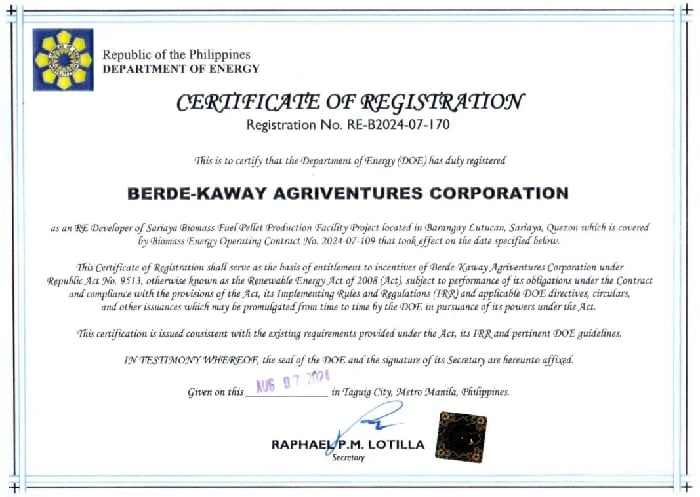
Berde Kaway, located in Quezon Province, has become the Philippines’ first and only DOE-certified biomass production facility, producing eco-friendly biomass pellets from agricultural waste. This certification, a result of close collaboration with REURASIA Management Corporation and the DOE, sets a new standard for renewable energy in the country. The facility currently produces 600 tons per month, with plans to expand to 250,000 tons per year by 2027. Berde Kaway’s biomass pellets offer a sustainable alternative to coal, helping industries reduce carbon emissions and earn carbon credits, all without additional infrastructure investment.
Quezon Province, Philippines – 07 August 2024 – In a groundbreaking achievement, Berde Kaway has been certified by the Department of Energy (DOE) as the first and only biomass production facility in the Philippines. This landmark certification, which involved close collaboration between Berde Kaway, REURASIA Management Corporation, and the DOE, marks a significant step forward in the country’s transition to sustainable energy solutions.
The Process of Biomass Pellet Production
Biomass pellet production at Berde Kaway begins with the collection of agricultural waste, which is abundant in a country with a thriving agricultural sector. Materials such as rice husks, coconut shells, and other agricultural by-products are gathered and processed into uniform, high-density pellets. These raw materials, often considered waste, are first dried to reduce moisture content, ensuring that the final product is energy-efficient when burned.
Once dried, the material is finely ground and compressed under high pressure to form pellets. No binders or additives are used in this process, making the pellets a pure and clean fuel source. The resulting biomass pellets are small, cylindrical, and highly dense, which allows for efficient storage and transportation. Each pellet packs a significant amount of energy, making them an ideal substitute for traditional fossil fuels like coal.
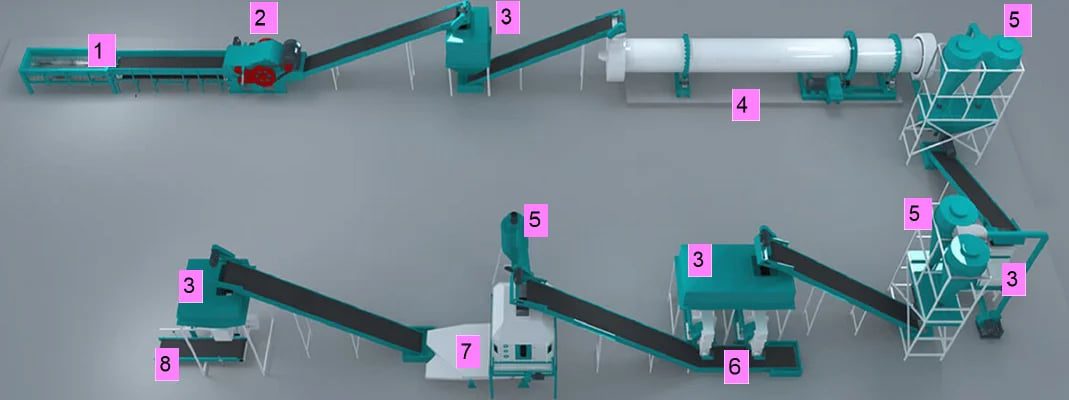
1. Raw material feed conveyor
2. Shredder – specially designed for Coconut Husks & other materials
3. Hammer Mill
4. Rotary Dryer heated from a biomass furnace
5. Dust Collection
6. Pelletizers – 2 units to maintain availability
7. Pellet Cooler – from the pelletizer the pellets are 85°C
8. Bulk truck loading, with option for feeding to sacks / jumbo bags
How Biomass Pellets Are Used
Biomass pellets are primarily used as fuel in industrial boilers, which are essential for generating the heat required in various manufacturing processes like paper, gypsum, tuna processing. These pellets can be burned in different types of boilers, including:
Grate-fired Boilers: These are among the most common types of boilers used in industries. They are well-suited for burning solid fuels like biomass pellets and can be found in industries such as sugar refining and food processing.
Fluidized Bed Boilers: Known for their efficiency and versatility, these boilers can handle a variety of fuels, including biomass pellets. They are particularly used in power generation and large-scale industrial applications.
Pulverized Fuel Boilers: Typically used for coal, these boilers can also be adapted to burn biomass pellets. This flexibility allows industries to gradually transition from coal to more sustainable fuel sources without significant investment in new infrastructure.
The process of burning biomass pellets in these boilers is straightforward and requires minimal modifications to existing equipment. The pellets are fed into the boiler, where they are burned to generate heat. This heat is then used to produce steam, which drives turbines or is directly applied in industrial processes such as drying, heating, and power generation.
Why Biomass Pellet Production Is Important for the Philippines
The significance of Berde Kaway’s biomass pellet production extends beyond just providing a renewable energy source. The facility plays a crucial role in the Philippines’ broader energy strategy, as outlined in the Philippine Energy Plan 2020-2040. The plan emphasizes the need to transition to clean energy sources, reduce greenhouse gas emissions, and increase the share of renewable energy in the country’s energy mix.
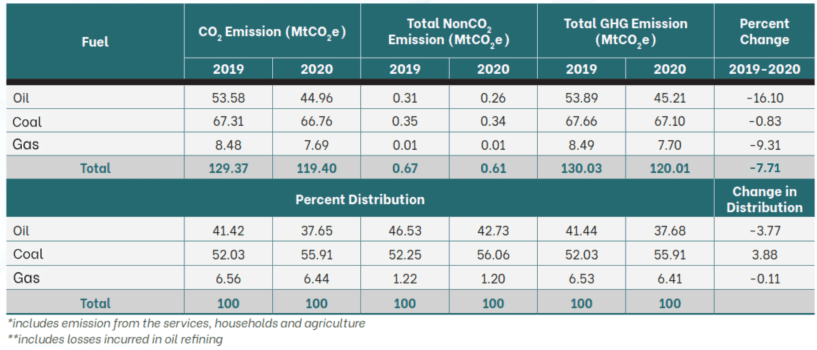
Heat generation in industrial processes is one of the largest sources of CO2 emissions in the Philippines while coal alone is 66.76% of it. By using biomass pellets, which are carbon-neutral, industries can significantly cut their emissions. This aligns with the country’s commitment under the Paris Agreement to reduce greenhouse gas emissions by 75% by 2030.
Furthermore, the adoption of biomass energy supports the local economy by utilizing agricultural waste, reducing waste management issues, and creating green jobs.
The Future of Biomass Energy in the Philippines
Berde Kaway’s current production capacity of 600 tons per month is just the beginning. With plans to ramp up production to 250,000 tons per year by 2027, the company is poised to meet the growing demand for sustainable energy solutions in the Philippines. This expansion includes the construction of a new facility and the development of dedicated plantations, ensuring a stable and affordable supply of biomass pellets for years to come.
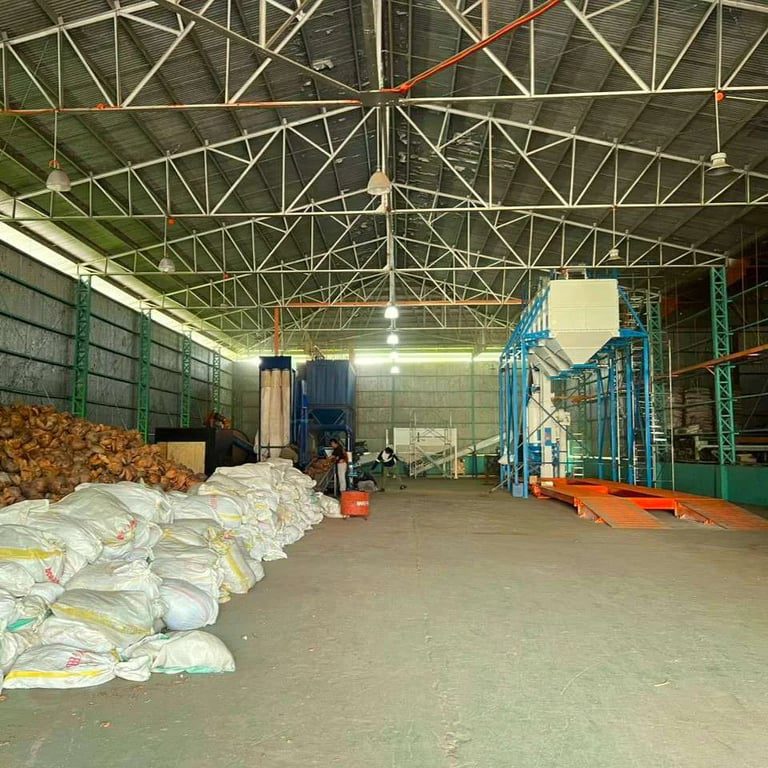
The strategic location of Berde Kaway’s facility in Quezon Province allows it to serve nearby industries efficiently, reducing transportation costs and emissions associated with fuel delivery. As more multinational companies in the Philippines strive to meet their sustainability targets, the demand for biomass pellets is expected to rise, driven by the dual benefits of reducing carbon emissions and qualifying for carbon credits.
The Role of Biomass in Reducing Coal Dependency
In this context, the development of biomass energy, as exemplified by Berde Kaway’s biomass pellet production, becomes increasingly crucial. Biomass offers a viable alternative to coal, capable of being integrated into existing industrial boilers with minimal infrastructure changes. The transition to biomass not only helps reduce CO2 emissions but also supports the circular economy by utilizing agricultural waste, thus addressing both environmental and economic challenges.
The certification of Berde Kaway by the DOE marks a significant milestone in the Philippines’ journey towards a sustainable energy future. By producing biomass pellets that serve as a viable alternative to coal, Berde Kaway is helping industries transition to cleaner energy sources, thereby reducing the country’s overall carbon footprint. With the support of REURASIA Management Corporation, which financed, engineered, and installed the facility’s equipment, Berde Kaway is not just leading the green wave—it is setting the standard for renewable energy in the Philippines.
As the world moves towards greener energy solutions, Berde Kaway stands at the forefront, ready to meet the challenges of the future and contribute to a cleaner, more sustainable Philippines.
by Ferry Bayu | Sep 2, 2024 | Business
Asuene APAC participated in the Asia Zero Emission Community (AZEC) meeting held on Wednesday, August 21, in Indonesia, which includes Japan and ASEAN countries.
At the pivotal Asia Zero Emission Community (AZEC) meeting, Asuene APAC and Dasar Consulting SDN.BHD. of Malaysia, a key player in ESG consulting and workshops, joined forces. This momentous collaboration is set to significantly advance ESG initiatives in Sarawak, Malaysia.
Through this partnership, we aim to promote the adoption of the “ASUENE” a carbon accounting platform, as well as the “ASUENE ESG” evaluation cloud service among local companies in Malaysia, particularly in Sarawak, thereby contributing to the advancement of decarbonization and ESG management in the region.
About AZEC
The Asia Zero Emission Community (AZEC) is a decarbonization cooperation framework led by Japan, partnering with 11 countries, including Australia and Southeast Asian nations. On August 21, the second ministerial meeting was held in Jakarta, Indonesia, with Japan represented by Minister of Economy, Trade and Industry Koichi Hagiuda. The meeting adopted a joint statement reaffirming AZEC’s principles, including “Net Zero through Diverse Pathways” and “Simultaneous Realization of Decarbonization, Economic Growth, and Energy Security.” The statement also agreed on sector-specific initiatives aimed at decarbonizing the power, transportation, and industrial sectors over the next decade.
During the meeting, approximately 70 new cooperation projects were agreed upon between AZEC member countries and Japanese companies. Asuene was represented by Masaaki Hamada, Country Manager and Director of Asuene APAC, who also signed the MOU with Dasar Consulting.
Background of the Partnership
In the Asia-Pacific region, including Southeast Asia, the push for decarbonization is gaining momentum. The Malaysian government’s ambitious goal to achieve carbon neutrality by 2050 and the announcement of the National Energy Transition Roadmap (NETR) in 2023 underscore this commitment. Against this backdrop, Asuene APAC and Dasar Consulting saw an opportunity to collaborate and promote ESG initiatives in Sarawak, Malaysia.
Among Malaysian states, Sarawak is a leader in renewable energy, hydroelectric power, and decarbonization efforts. With 13 industrial parks within its borders, the need for decarbonization and ESG initiatives among companies in the state is growing.
On the momentous occasion of the AZEC meeting, Asuene APAC and Dasar Consulting, headquartered in Sarawak, Malaysia, joined hands in a significant partnership. This collaboration is a testament to our shared commitment to promoting ESG initiatives in the state, and we are excited to embark on this journey together.
Details of the Partnership
“ASUENE” offers a comprehensive carbon accounting platform across the entire supply chain for companies and municipalities in accordance with the GHG Protocol’s Scope 1-3. Additionally, we provide a sustainability consulting service. Our strength lies in delivering these comprehensive one-stop solutions for decarbonization, providing companies with the tools and support they need to advance their decarbonization management with confidence.
Dasar Consulting supports decarbonization and ESG management for Malaysian companies by offering ESG consulting and workshops.
Through this partnership, we will promote the adoption of the “ASUENE” a carbon accounting platform, as well as the “ASUENE ESG” evaluation cloud service in Sarawak, Malaysia. This initiative holds the potential to significantly impact corporate decarbonization in the state and expand support for decarbonization and ESG management across Asia from our APAC base, fostering a brighter, more sustainable future.
About Dasar Consulting
Company Name: Dasar Consulting SDN.BHD.
Representative: Managing Director Charles Liew
Headquarters: 1st Floor, Lot 12164, Block 16, KCLD, Jalan Song, Kuching, Sarawak 93350.

by | Sep 1, 2024 | Business
This is the first part of the four-part series of The Future of Media and Information Literacy (MIL) in the Philippines. This article will delve into the current state, emerging trends, challenges, and opportunities in MIL.
To navigate the vast sea of information among Filipinos, they are required to have the ability to access, analyze, evaluate, and create media in various forms. This is where Media and Information Literacy (MIL) steps in. MIL empowers individuals, ensuring they become critical thinkers and responsible media consumers and producers, especially with the rapid evolution of technology and media consumption habits.
Fortunately, the Philippines integrated MIL into its curriculum. However, with the advancement of technology, the contents of the subjects become obsolete and they require constant updates.
This article explores the current state of MIL in the country, emerging trends, challenges, and opportunities, offering insights into how the nation can continue to advance its MIL framework.
Current State of Media and Information Literacy (MIL) in the Philippines
The Philippines has made commendable strides in integrating Media and Information Literacy (MIL) into its educational framework. This initiative is designed to equip students with the necessary skills to critically assess and responsibly engage with media. These competencies can develop a generation of individuals who are not only informed but also capable of producing responsible media content.
However, several challenges still persist. One of the most pressing issues is the inadequate training of teachers. Many of them lack the necessary resources and understanding to effectively teach MIL. This gap in training often results in a limited comprehension of MIL’s full scope and significance among educators. Sadly, this gap produces varied effectiveness on certain demographics. The more well-off the schools, the more effective MIL instruction is taught.
To address these issues, there is a need for a more structured and consistent approach to MIL education regardless of the school’s background. However, this requires proper resource allocation.
Nevertheless, there are challenges that need to be addressed and opportunities to exploit.
Challenges and Opportunities in Media and Information Literacy (MIL)
The promotion of Media and Information Literacy in the Philippines is not without its challenges. However, there are significant opportunities that can enhance MIL education across the country.
Challenges
• Misinformation. This is the main challenge of modern democracies. When social media became mainstream, it decentralized information. As a result, there is a lack of checks and balances of information and editorial standards to prevent misinformation. That is the design flaw of the democratization of the medium. It allows bad actors to skew public opinions to amplify the voices of special interests.
• Digital Divide. This divide stems from the lack of economic resources on the end of the households to afford technology so that they can practice digital literacy. This disparity limits their access to information and hinders their ability to develop essential digital literacy skills.
• Resource Constraints Inadequate teaching materials and limited teacher training further exacerbate the challenges faced by MIL education in the Philippines. Without the necessary resources, educators are often ill-equipped to provide high-quality MIL instruction. Hence, students experience fragmented and inconsistent educational standards.
Opportunities
• Innovative Educational Programs. This includes leveraging technology in order to provide students with recent and engaging lessons. However, innovation should be complemented with inclusion so that all students of different backgrounds can be accommodated.
• Community Engagement. Understand that instilling MIL among people is a collective effort so everyone must do their part to make people think critically. However, this also requires people to consider cultural barriers and logistical issues to make the initiative effective.
• Policy Development. This requires policymakers to prioritize MIL initiatives. From curriculum planning to execution, it must be done with high-quality standards. However, they have to ensure that there are enough resources and equal application to ensure that the policy will be integrated fully across the board not just on specific regions or backgrounds.
Emerging Trends in Media and Information Literacy (MIL)
Though it is clear that the Philippines is still addressing those issues and seizing opportunities to improve MIL instruction, the country has to move quicker because innovation is faster than before. Hence, the mode of instruction that they are teaching may be obsolete.
For example, it is easier to create content through artificial intelligence. It is literally an automated writing intern where students will just write some prompt and the chatbot produces essays.
Another example is social media algorithms which feed users content that they are constantly engaging with. This is not bad per se but it creates an echo chamber where people develop their own biases and avoid taking other perspectives. In effect, it creates social divisions.
Lastly, there are new technologies introduced in the market such as Virtual Reality (VR), Augmented Reality (AR), and the Internet of Things (IoT). They are interactive and immersive technologies. In relation to MIL education, this is a new topic in itself that must be developed and this begs the question of whether the Philippines has a response to it in its own context. Moreover, it means additional expenses to the education budget. This is not a luxury but a necessity to keep up with global competitiveness.
Conclusion
The future of Media and Information Literacy (MIL) in the Philippines is at a pivotal point, driven by the rapid evolution of the digital landscape. As technology continues to advance, the need for robust MIL education becomes increasingly urgent. The Philippines has made significant progress in integrating MIL into its educational framework, but challenges such as misinformation, the digital divide, and resource constraints remain.
However, by embracing emerging trends, leveraging new technologies, and fostering community engagement, the country can overcome these challenges and seize the opportunities that lie ahead. A concerted effort from educators, policymakers, and technology developers is essential to creating a media-literate society capable of navigating the complexities of the digital age. As we look to the future, the continued development and promotion of MIL in the Philippines will play a crucial role in shaping an informed, responsible, and empowered citizenry.
Coach Boost Gio

by | Sep 1, 2024 | Business
Introduction to Business 4.0
As we stand on the brink of a technological revolution that will fundamentally alter how we live, work, and relate to one another, the concept of Business 4.0 has emerged as a beacon of transformation. Business 4.0, or Industry 4.0, represents the fourth major era of the Industrial Revolution, characterised by digital transformation and the integrating of cyber-physical systems into the heart of industry.
In collaboration with key partners like Janus Aether, MakeSense is pioneering new ways to leverage data, AI, and advanced automation technologies to help businesses thrive in an increasingly digital world. Together, they are empowering enterprises to navigate this complex landscape and achieve sustainable growth.
This revolution introduces what is termed ‘Smart Manufacturing’—the use of IoT, cloud computing, AI, Machine Learning, and more to increase the efficiency and productivity of manufacturing processes. It is not merely about automation but about creating interconnected systems capable of making real-time decisions.
MakeSense: At the Forefront of Technological Enablement
MakeSense is a boutique organisation pioneering the application of Data and AI services to propel businesses into the era of Business 4.0. Focusing on crafting tailored solutions that enhance data accessibility, security, and reliability, MakeSense is dedicated to helping companies innovate and maintain competitive edges in rapidly evolving markets.
Data and AI: The Engine that is driving Business 4.0
Data is the cornerstone of any modern enterprise, and MakeSense excels in manipulating complex data sets to drive business intelligence and outcomes. Through advanced analytics and machine learning, MakeSense transforms static data into dynamic insights that fuel decision-making and strategic planning.
AI services at MakeSense go beyond conventional automation to include sophisticated AI frameworks like Salesforce’s Einstein and cutting-edge hyper-automation technologies. These tools
automate existing processes, predict future trends, adapt to new data, and continuously learn and improve.
Real-World Applications and Impact
MakeSense’s approach is grounded in real-world applications and measurable results. For instance, through its partnership with Salesforce, MakeSense has implemented solutions that automate and enhance customer relationship management systems using AI. This not only improves efficiency but also enhances the user experience, providing a 360-degree view of customer interactions.
Another significant aspect of MakeSense’s work involves making technology accessible and trustable. In alignment with Salesforce’s trust model, MakeSense ensures that its AI solutions prioritise data security, privacy, and responsible usage—key concerns in today’s digital landscape.
MakeSense at Business 4.0 Event
At the upcoming Business 4.0 event, MakeSense will showcase its latest AI and Data services innovations. Attendees will have the opportunity to see firsthand how MakeSense’s solutions are driving the digital transformation of numerous enterprises across various industries. The event will also feature discussions on the future of manufacturing, the role of data in modern business strategies, and the ethical implications of AI.
Conclusion: Your Pathway to Transformation
As businesses navigate the complexities of Industry 4.0, partnering with leaders like MakeSense can illuminate the pathway to transformation. By integrating advanced data analytics and AI-driven insights, companies can unlock new levels of efficiency, agility, and growth.
We invite all attendees to join MakeSense at the Business 4.0 event to explore how your business can not only survive but thrive in the age of digital revolution. MakeSense is more than a service provider; they are your strategic partner in redefining the possibilities of what a business can achieve with the right technological tools.
Learn more at https://makesensesoft.com/ai-data-services/

by | Aug 31, 2024 | Business
Get ready to be inspired by visionary leaders, elite billionaires, and dynamic young innovators at this must-attend event, where the secrets to success in today’s fast-paced digital world will be revealed. Hear from those at the cutting edge of technology and entrepreneurship as they share strategies for leveraging the power of digital tools, even from the palm of your hand. Don’t miss the chance to engage with trailblazers who are shaping the future of business—an event hosted by Zoomanity, Janus Aether, Capillary Technologies, and MakeSense that promises to open your eyes to endless opportunities. Join us, learn, connect, and be prepared to transform your business for the future!
Join us for an extraordinary event where renowned speakers and elite billionaires, who are at the forefront of today’s technological revolution, will share their invaluable insights and experiences on achieving remarkable success in the modern world. These leaders, known for their innovation and entrepreneurial spirit, will inspire us by revealing the strategies and mindsets that have driven their incredible journeys.
At the same time, we’ll bridge the gap between generations by inviting young innovators to share their unique experiences in navigating today’s digital landscape. They will demonstrate how easy it can be to use technology, leveraging just a smartphone, to start and scale a business. Their fresh perspectives will illuminate how the new generation is reshaping industries and creating opportunities in ways previously unimaginable.
This much-needed event is brought to you by Zoomanity, Janus Aether, Capillary Technologies, and MakeSense, who are committed to fostering an environment of learning, growth, and collaboration. Together, we will explore the countless possibilities the future holds, equipping ourselves with the knowledge and tools needed to thrive in the ever-evolving business world.
Stay tuned as we unveil our impressive lineup of speakers who will provide groundbreaking insights into harnessing technology to drive success. Don’t miss this chance to listen, engage, and interact with some of the brightest minds in business today. Join us on September 10, 2024, at the Marco Polo Ortigas and secure a brighter future for your business through the knowledge and inspiration gained from this exceptional gathering.

by | Aug 31, 2024 | Business
Understanding MIL in the Digital Age
Media and Information Literacy (MIL) encompasses the skills that individuals need to figure out the complexities of information and media. This involves critical thinking skills to assess content. This includes understanding its context and making informed decisions based on reliable sources.
Today, we are constantly bombarded with information. They may either benefit or harm us. Hence, MIL is a must. This skill empowers people to combat misinformation. It also promotes inclusivity by bridging the information gaps. This is also allows others to support active citizenship.
The Essence of Human Rights
Human rights are the basic rights and freedoms inherent to all individuals, regardless of background. They are universal, inalienable, and indivisible. In connection to MIL< education plays a key role in promoting human rights. It equips us with the tools to understand, claim, and advocate for our rights and those of others.
Access to information is also a cornerstone of human rights. It allows people to express themselves freely, learn, and participate in public life. MIL enables others to utilize this access effectively.
The Powerful Impact of MIL on Human Rights
MIL fosters empowerment through knowledge and critical thinking, which are essential for exercising other rights. It provides the tools to combat misinformation, to promote an informed citizenry crucial for democratic societies.
Moreover, MIL fosters democratic participation by enabling citizens to engage critically with media content and understand the influences on public opinion. This leads to informed policy engagement and accountability in governance.
Overcoming Challenges to MIL
Challenges exist in recognizing MIL as a right. First of all, the right to education is barely recognized in international human rights. Hence, this is up to several nations to consider this as a right.
However, it could be considered as a right because it is a precursor to equal protection. There needs to advance equality, especially in the advent of the digital divide and the worsening of socio-economic factors that constitute state-sponsored discrimination against this person who lacks access to the necessary resources and opportunities for many.
Moreover, it could also be connected to freedom of information where Censorship and restrictions on information also hinder individuals from developing MIL skills. Hence, it prevents a society where people can exercise their voices in a democratic society.
Addressing these challenges requires effective policies. Governments, educators, and organizations need to collaborate to implement policies that prioritize MIL education. It begins by bridging the digital divide and protecting access to information.
Conclusion
Media and information literacy is far more than a skill. It is a fundamental right vital for empowered citizens and democratic societies. Recognizing and promoting MIL is a collective responsibility. It requires the concerted efforts of individuals, educators, and policymakers.
By embracing MIL, we can create a world where everyone is equipped to critically engage with information, make informed decisions, and contribute meaningfully to society.
Coach Boost Gio
by Ferry Bayu | Aug 31, 2024 | Business
Total Cleanz Singapore, August 30, 2024 — Total Cleanz Singapore is proud to announce the launch of its new e-commerce platform, Total Cleanz Shop, on September 1, 2024. This dedicated online platform will provide customers with a convenient way to purchase a range of cleaning solutions, products, and general cleaning services at their fingertips. The website is live at totalcleanzshop.com.
With the increasing demand for a seamless and efficient shopping experience, Total Cleanz Shop is set to meet the needs of the new generation of consumers who prefer quick transactions without the need for lengthy communications. This platform is an extension of the company’s commitment to enhancing customer experience by integrating its cleaning solutions and services into one easily accessible online space.
Key Features and Benefits
- Convenience and Accessibility. Customers can effortlessly browse and purchase cleaning products and book general cleaning services through the user-friendly e-commerce platform.
- Diverse Product Range. While the platform is currently building its inventory, it will continuously expand to offer a wider variety of cleaning solutions, tools, and accessories.
- Enhanced User Experience. The platform allows for quick and easy purchasing without the need for direct communication, streamlining the buying process.
“Total Cleanz Shop represents a significant step forward in our mission to adapt to the evolving needs of our customers/clients,” said Cheryl Chan, founder of Total Cleanz Singapore. “By creating this platform, we are making it easier for our customers to access our products and services anytime, anywhere. We believe this will transform how consumers engage with our offerings.”
Addressing Market Needs
Total Cleanz Shop addresses the growing trend among consumers to seek convenient, online purchasing options that save time and reduce the need for in-person or telephonic interactions. Total Cleanz is leveraging this e-commerce platform to extend its reach and tap into new market opportunities, including expanding its product line to serve the home living sector better.


 The Manila Hotel is located beside kilometer zero (0), where the City of Manila begins, and is within walking distance from the Philippines’ known landmarks: Rizal Park, Intramuros, and National Museums. Defined by its history, elegance, and world-class service, The Manila Hotel is the choice hotel for the most distinguished clientele.


 Total Cleanz Singapore, August 30, 2024 —



You must be logged in to post a comment.