by | Mar 21, 2025 | Business
Analysis of over 2.4 million online job applications in Australia reveals that the median time to fill a vacancy is 32 days, with each role attracting 65 applications. The research by SmartRecruiters, the recruiting AI company, also reveals that of the 65 applicants per job post, 6% typically get invited to interview, resulting in 2% receiving job offers.
In terms of the recruitment process, the data reveals that job applications in Australia are on average, reviewed in 6 days, with interviews taking place 13 days after applications are received. Globally, companies using AI fill vacancies 26% faster than those not using it.
The research examined 89 million job applications across Australia, France, Germany, the United States, and the United Kingdom. According to the study, 83% of Australian applicants accept their job offer, but only 3% of applicants come from referrals, and 4% from internal hires – which is significantly less than the global average. Recruiters in Australia are highly efficient, bringing on 78% more hires per recruiter than the global average.
Rebecca Carr, CEO of SmartRecruiters, said: “The way that Australian businesses manage talent acquisition continues to evolve. There is increasing adoption of AI to streamline the process, making it more efficient and effective and ensuring that the candidate experience reflects the employer’s values while being compliant with employment legislation.
“The data shows that Australian businesses are ahead of France, Germany, the United States, and the United Kingdom when it comes to moving from application to job offer, perhaps reflecting the competition for talent in the job market in Australia.”
This study is part of SmartRecruiters’ newly established annual hiring benchmark report, which will provide year-over-year insights into hiring trends, recruitment efficiency, and internal mobility across key global markets. SmartRecruiters analysed 12 months of aggregated, anonymised application data processed through its applicant tracking system from September 2023 through August 2024.
To download the report, click here.
by | Mar 21, 2025 | Business
Top Crypto Exchanges In The Philippines To Start Crypto Investing
For starters, investing in crypto is intimidating, and starting to diversify your assets toward digital finance, in that of Cryptocurrencies is relatively new. Cryptocurrency has become one of the most exciting and innovative ways to invest, and the Philippines has seen a surge in interest in this digital asset class. Whether you’re new to investing or looking to diversify your portfolio, choosing the right crypto exchange is crucial for ensuring your journey into the world of cryptocurrencies is secure, user-friendly, and efficient. In this article, we’ll take a look at the top crypto exchanges in the Philippines, perfect for beginners looking to invest and trade in the world of crypto investing.
- Bitget

Bitget, trusted by 100 million users worldwide, is one of the top crypto exchanges globally which started in 2018. It boasts a reliable and secure platform to safeguard your Bitcoins and other crypto assets. Whether you just want to buy Bitcoin long-term or trade it short-term with various different products, you can never go wrong with Bitget. With over 700+ coins to choose from, surely the crypto token that you are looking for is listed in Bitget. With its $600+ million Bitget Protection Fund, users need not to worry about their assets being stolen. With industry-leading security and full transparency of asset records with their Proof of Reserves (PoR) that you can track in real-time, Bitget offers an efficient and smart trading experience to its users.
Bitget is known for its largest crypto copy trading platform and boasts its platform token, BGB which exceeded far great expectations for the first half of 2024. Aside from Bitcoin breaking all-time high prices up to $110K, BGB also surged to $8.5 in December of 2024 (as of the time of writing). Also, Bitget has its own Web3 wallet known as Bitget Wallet which is in a league of its own compared to other wallets out there with safer transactions and competitive prices.
Key Features:
BGB, as a platform token, the top priority for BGB is to provide diverse range of exclusive benefits to holders, so that we can benefit together from Bitget’s growth
Low fees, with the platform offering some of the most competitive rates in the industry.
Supports local payment methods
High-level security, with monthly Proof of Reserves (PoR) and Protection Fund Report to assure users of its transparency and credibility
Why Choose Bitget in the Philippines: Bitget’s global presence and strong reputation make it an excellent choice for Filipino crypto investors. Whether you’re a beginner looking to start with the basics or an experienced trader interested in advanced features, Bitget provides a well-rounded platform with all the necessary tools and security.
- Coins.ph

One of the top cryptocurrency platforms in the Philippines, Coins.ph excels at fusing practicality with quality financial services. Its ability to smoothly combine digital currency with conventional financial operations—enabling users to purchase, sell, and manage cryptocurrencies alongside regular financial activities like bill payments and mobile top-ups—is what makes it admirable. Recently, they introduced PHPC stablecoin which is backed by Fiat, with a target price of 1 PHPC to 1 Philippine Peso. With this release, Coins.ph aims to use it in cross-border money transfers, merchant payments, and trading. Additionally, it places a strong emphasis on security, protecting users’ assets and data through encryption. Coins.ph provides a complete solution that assists both new and seasoned users in understanding the world of cryptocurrencies by bridging the gap between digital money and everyday use.
Why Choose Coins.ph in the Philippines: Coins.ph is a fantastic option for beginners because of its simplicity and ease of access. With its ability to link with popular local payment apps like GCash and PayMaya, it makes the transition into crypto very seamless for Filipinos.
- PDAX

PDAX is a domestic digital asset exchange in the Philippines. You might have seen this in GCash’s crypto platform, as they power GCrypto. They are also UnionBank’s cryptocurrency partner. PDAX maintains its position as one of the top cryptocurrency exchanges based in the Philippines by focusing on user convenience and accessibility. The exchange provides quick trading, and affordable prices using the Philippine Peso, way to go in ensuring ease of access, right? PDAX is a force to be reckoned with as one of the greatest cryptocurrency exchanges for Filipino customers due to its ease of use and simple interface.
Why Choose PDAX in the Philippines: For Filipino investors who want a local platform with government oversight, PDAX is an excellent choice. The exchange’s focus on security, local payment methods, and regulatory compliance makes it a safe and reliable platform for those new to crypto investing.
- Kraken

A well-known cryptocurrency exchange with a wide range of features and strong security measures is Kraken. Kraken, a trading platform that caters to both novice and advanced traders, was founded in 2011 and offers spot trading, futures, and margin trading. Its use of cold storage for cash, frequent security audits, and robust encryption procedures all serve to highlight its emphasis on security. Kraken is well-known in the cryptocurrency trading scene for its dependability, transparency, and user-friendliness. It also offers cheap costs, a wide range of cryptocurrencies, and a user-friendly interface.
Why Choose Kraken in the Philippines: Kraken is well-suited for both beginners and more advanced traders. Its combination of robust security, range of cryptocurrencies, and advanced trading features gives it a strong edge. For those who may want to get into more complex trading later on, Kraken provides the tools to grow and diversify their portfolio.
- Crypto.com

Founded in 2016, Crypto.com is a well-known cryptocurrency platform that provides a variety of financial services, such as trading, staking, and interest-earning on cryptocurrencies. The platform supports a large variety of digital content and has an intuitive user interface. Among its noteworthy products are a native token (CRO), a Visa card with cryptocurrency benefits, and a range of DeFi and NFT services. With features like cold storage and sophisticated encryption, Crypto.com prioritizes security and good user experience.
Why Choose Crypto.com in the Philippines: Crypto.com’s versatility makes it an attractive option for Filipinos who are looking to explore more than just basic trading. Its broad range of services—like staking, rewards, and its crypto Visa card—gives users many ways to grow their portfolios. For those looking to dip into multiple aspects of the crypto ecosystem, Crypto.com is a one-stop-shop.
As the cryptocurrency market continues to grow, the Philippines is emerging as a major hub for crypto adoption. Whether you’re a beginner or have some experience in investing, the right exchange can make all the difference in your crypto journey. All in all, no matter what Crypto Exchange you choose, choose one that prioritizes your safety and security.
by | Mar 21, 2025 | Business
Setting up a representative office in Indonesia can be a strategic move for foreign businesses aiming to explore the Indonesian market without the commitment of a full-scale operation. This guide will walk you through the comprehensive process of representative office registration in Indonesia, ensuring you understand the legal requirements, steps involved, and the benefits you can gain from establishing a presence in one of Southeast Asia’s largest economies.
Establishing a representative office in Indonesia offers foreign companies a strategic entry point into one of Southeast Asia’s most dynamic markets. This article delves into the essentials of setting up a representative office, including the legal framework, types of offices, and the step-by-step registration process. It highlights the benefits, from cost-efficiency to strategic advantages, and addresses the potential challenges and compliance requirements. Whether you’re exploring market opportunities or aiming to build local relationships, understanding the intricacies of representative office registration in Indonesia is crucial for a successful venture.
Introduction to Representative Office Registration in Indonesia
Establishing a representative office in Indonesia offers foreign companies an effective way to explore the market without committing to a full-scale business setup. This type of office allows businesses to engage in promotional activities, market research, and other non-commercial operations.
Legal Framework and Requirements
Regulatory Bodies :In Indonesia, representative offices are regulated by various government agencies, including the Indonesia Investment Coordinating Board (BKPM) and the Ministry of Trade. These bodies ensure that foreign entities comply with local laws and regulations.Legal Constraints: Representative offices are not permitted to engage in direct sales or revenue-generating activities. Their scope is limited to non-commercial functions such as market research, liaison, and promotional activities.Compliance: Maintaining compliance involves adhering to regulations set by the BKPM and other relevant authorities. Regular reporting and audits may be required to ensure ongoing adherence to legal standards.
Types of Representative Offices
KPPA (Representative Office for Foreign Trade Company)
KPPA allows foreign companies to establish a presence for promoting their products and services, conducting market research, and coordinating with local agents and distributors.
KP3A (Representative Office for Foreign Trading Company)
KP3A is designed for foreign construction companies to manage projects, supervise, and conduct market studies in Indonesia.
BUJKA (Representative Office for Foreign Construction Company)
BUJKA allows foreign construction companies to operate and do construction activities in Indonesia. Although the basic rules of representative office cannot generate revenue, under BUJKA, the entity can sign construction contracts and carry out the project.
Representative Office of Foreign Electric Power Support Services (kantor perwakilan jasa penunjang tenaga listrik asing)
This type of Representative Office is for foreign company that wants to do electricity installation or as a technician consultant.
Although there are a lot of types of representative offices, in this article, we will elaborate more on the KPPA and KP3A. If you need more info on how to open the other type of representative office, please contact us.
Benefits of Setting Up a Representative Office
Market Entry
A representative office provides a low-risk entry point into the Indonesian market, allowing companies to build relationships and understand market dynamics before making significant investments.
Cost-Efficiency
Setting up a representative office is more cost-effective compared to establishing a full-fledged subsidiary. It requires lower initial investment and operational costs.
Strategic Advantages
Having a local presence helps in establishing credibility, improving communication with local stakeholders, and gaining a deeper understanding of the market conditions.
Step-by-Step Registration Process
Detailed Process
Initial Consultation: Engage with a local consultant or legal advisor to understand the requirements and process.Document Preparation: Gather all necessary documents, including parent company details, BOD listing documents, and legal documents.Submission to BKPM: Submit the application and documents to the BKPM for approval.Approval and Licensing:Once approved, the BKPM will issue the necessary licenses and permits.Office Setup: Setting up the representative office by opening a bank account, hiring employees, tax and accounting setup, etc to support the operation of the representative office.
Timelines
The entire registration process can take between one to three months, depending on when you receive the reference letter issued by the Trade Attache in the Indonesian embassy where the parent company is located. After the reference letter is issued, the registration process can be started and it usually takes around 1 – 3 working days.
Necessary Documents for Registration
Required Paperwork
Letter of Intent: A formal letter expressing the intent to establish a representative office.Parent Company Documents: Articles of association, business license and Board of Directors listing documentsProof of Office Address: Lease agreement or property ownership documents.Power of Attorney: If a local consultant is handling the registration process.Identity Documents: passport (if foreigners) or KTP (if Indonesian)
Templates
Standard templates for letters and forms are often provided by the BKPM or can be sourced from legal consultants. In some cases, it may not be provided by the BKPM and therefore you must draft it by yourself or can request from the legal consultant which templates are acceptable.
Submission Process
Documents must be submitted to the relevant authorities.
Key Regulatory Authorities
BKPM (Indonesia Investment Coordinating Board)
The BKPM is the primary agency responsible for overseeing foreign investment and ensuring compliance with local regulations.
Ministry of Trade
This ministry regulates trade-related activities and ensures that representative offices adhere to trade laws.
Other Relevant Bodies
Depending on the nature of the business, other regulatory bodies may include the Ministry of Public Works for construction companies and the Ministry of Social Affairs for non-profit organizations.
Cost of Establishing a Representative Office
Initial Costs
Initial costs include registration fees, legal consultation fees, and expenses related to setting up the office premises.
Ongoing Expenses
Ongoing expenses encompass office rent, salaries for local staff, and compliance-related costs such as annual reports and audits.
Budgeting Tips
Effective budgeting involves forecasting both initial setup costs and ongoing operational expenses. Engaging a financial consultant can help in creating a realistic budget.
Challenges and Considerations
Potential Hurdles
Common challenges include navigating bureaucratic processes, understanding local business culture, and ensuring compliance with all regulatory requirements.
Strategic Planning
A well-thought-out business plan that includes market analysis, risk assessment, and strategic objectives can help mitigate potential hurdles.
Risk Management
Engaging local legal and business experts can aid in identifying and managing risks associated with setting up and operating a representative office.
Post-Registration Compliance
Annual Reports
Representative offices are required to submit activity reports to the BKPM per semester and/or other relevant authorities.
Audits
Regular audits ensure compliance with local regulations and help in maintaining transparency in operations.
Legal Obligations
Maintaining a representative office involves adhering to various legal obligations, including tax filings and labor laws.
Taxation for Representative Offices
Tax Obligations
While representative offices do not engage in direct commercial activities, they are still required to file zero tax returns and may be subject to certain taxes such as withholding tax.
Employment and Staffing
Hiring Local vs. Expatriate Staff
Representative offices can hire both local and expatriate staff. Understanding local labor laws and regulations is crucial for compliance. In case you want to hire an expatriate, a ratio local and expatriate are applied. Before hiring the expatriate staff, please check the applicable ratio before you hire expatriate staff.
Employment Regulations
Employment contracts, benefits, and working conditions must comply with Indonesian labor laws. Engaging a local HR consultant can be beneficial.
Office Location and Setup
Choosing a Location
The representative office must be located in an office building in the capital Province (except for the KP3A). Selecting a strategic location that aligns with business objectives and operational needs is critical. Consider factors such as accessibility, cost, and infrastructure.
Office Requirements
Ensure the office meets all legal requirements and is adequately equipped to support the representative office’s activities.
Infrastructure
Invest in essential infrastructure, including communication systems, office furniture, and technology to support efficient operations.
Legal Representation and Consultancy
Importance of Legal Advice
Engaging a legal advisor ensures compliance with local laws and helps navigate complex regulatory processes.
Selecting a Consultant
Choose a consultant with expertise in setting up representative offices in Indonesia. Check credentials, experience, and client testimonials.
Case Studies and Success Stories
Examples of Successful Representative Offices
Review case studies of foreign companies that have successfully established representative offices in Indonesia to gain insights and best practices.
Lessons Learned
Learn from the experiences of other companies to avoid common pitfalls and make informed decisions.
Conclusion
Establishing a representative office in Indonesia is a cost-effective way for foreign companies to explore the local market and build a presence without committing to full-scale operations. This process involves understanding the legal requirements, navigating the regulatory framework, and ensuring compliance with local laws. Different types of representative offices cater to various business needs, such as trade, construction, and non-profit activities. The benefits include market entry, cost-efficiency, and strategic advantages. However, companies must be prepared to manage potential challenges and maintain compliance through regular reporting and audits.
To successfully navigate the complexities of setting up a representative office in Indonesia, expert guidance is invaluable. For comprehensive support and professional assistance, visit CPT Corporate
by | Mar 21, 2025 | Business
Alsons Consolidated Resources (ACR), the publicly listed company of the Mindanao-focused Alcantara Group, reported an 11% increase in its net income for 2024 – rising to Php2.53 billion from Php2.28 billion in 2023.
Alsons Consolidated Resources (ACR), the publicly listed company of the Mindanao-focused Alcantara Group, reported an 11% increase in its net income for 2024 – rising to Php2.53 billion from Php2.28 billion in 2023. This growth was primarily driven by rising electricity demand, favorable trading opportunities in the Wholesale Electricity Spot Market, and the successful launch of its Retail Electricity Supply (RES) unit. Furthermore, the company’s performance last year reflects the value of ACR’s strategic initiatives and investments and its continued commitment to expanding its presence in the energy sector while capitalizing on market dynamics.
“In the first quarter of 2024, we faced disruptions caused by the 2023 Mindanao earthquake. Despite this challenge, we demonstrated resilience and achieved a strong recovery, closing the year with solid financial performance,” said ACR Deputy Chief Financial Officer Philip Edward B. Sagun.
Sagun attributed ACR’s financial growth to the continued performance of the 237-Megawatt Sarangani Energy Corporation, which remains one of the most cost-efficient baseload power sources in Mindanao. Additionally, the implementation of the ancillary services agreements for Western Mindanao Power Corporation in Zamboanga and Mapalad Power Corporation in Iligan played a vital role in bolstering the company’s earnings.
“We are confident that our growth prospects will continue, fueled by the anticipated increase in power demand and our strategic focus on expanding our RES portfolio,” Sagun added.
In 2024, ACR achieved key milestones, including the completion and operational launch of its first renewable power plant—the 14.5-MW Siguil Hydropower Plant in Sarangani. The company’s new RES unit has also gained momentum, securing major clients such as Holcim Philippines and Metro Retail Stores Group, Inc., with a combined contracted capacity of 43 MW.
“We remain steadfast in our commitment to expanding our renewable energy portfolio, with several projects currently under development. This year, we are targeting to launch our first large-scale solar power project in Mindanao, marking a significant milestone in our sustainability strategy,” Sagun concluded.
by | Mar 20, 2025 | Business
Ripple secures a major legal victory as the SEC drops its appeal, boosting XRP’s legitimacy and market confidence. Celebrate with Bitrue’s exclusive XRP staking pool, offering up to 20% APY for new users and 5% APY for existing holders. Don’t miss this opportunity to maximize your XRP earnings!
Ripple Labs has emerged victorious in its prolonged legal battle against the U.S. Securities and Exchange Commission (SEC), marking a significant moment for both the company and the broader cryptocurrency industry.
Ripple CEO Brad Garlinghouse confirmed on March 19 that the SEC had officially decided to drop its appeal, bringing an end to the four-year-long dispute.
A Long-Awaited Win for Ripple and Crypto
Garlinghouse announced the news in a video posted on his X account, stating, “I’m finally able to announce that this case has ended. It’s over. Today is a victory and a long-overdue surrender from the SEC.”
The lawsuit, which began in December 2020, accused Ripple of raising $1.3 billion through unregistered XRP sales.
However, after years of litigation, Ripple secured a crucial legal win in August 2024 when a federal New York judge ruled that XRP’s “programmatic sales” on secondary markets did not constitute securities transactions.
While the court upheld a $125 million penalty for institutional sales, this amount was significantly lower than the SEC’s initial demand of nearly $2 billion.
SEC’s Shift in Stance
Although the SEC has yet to make a formal announcement, sources indicate that the decision to drop the appeal is subject to an internal Commission vote and approval.
A Ripple spokesperson noted that the official withdrawal of the case could take “several weeks” and remains under the SEC’s control.
The legal battle had been closely watched, as a victory for the SEC could have had far-reaching consequences for the classification of cryptocurrencies as securities versus commodities.
However, the regulatory landscape shifted significantly following the 2024 U.S. elections and the subsequent departure of former SEC Chair Gary Gensler.
Under the leadership of Acting Chair Mark Uyeda, the agency has taken a less aggressive stance toward the crypto industry, dropping enforcement actions against major exchanges such as Coinbase and Kraken.
Ripple’s Legal Standing Strengthened
Ripple’s Chief Legal Officer, Stuart Alderoty, emphasized the importance of this victory, stating, “With the SEC dropping its appeal, Ripple is now in the driver’s seat, and we’ll evaluate how best to pursue our cross-appeal. Regardless, today is a day to celebrate this victory.”
The ruling also strengthens Ripple’s position within the cryptocurrency space, reinforcing the legitimacy of digital assets and setting a legal precedent that could influence future regulatory frameworks.
Reports suggest that the SEC’s new leadership may even consider classifying XRP as a commodity rather than a security, which could redefine digital asset regulations in the U.S.
XRP Price Surge and Market Reaction
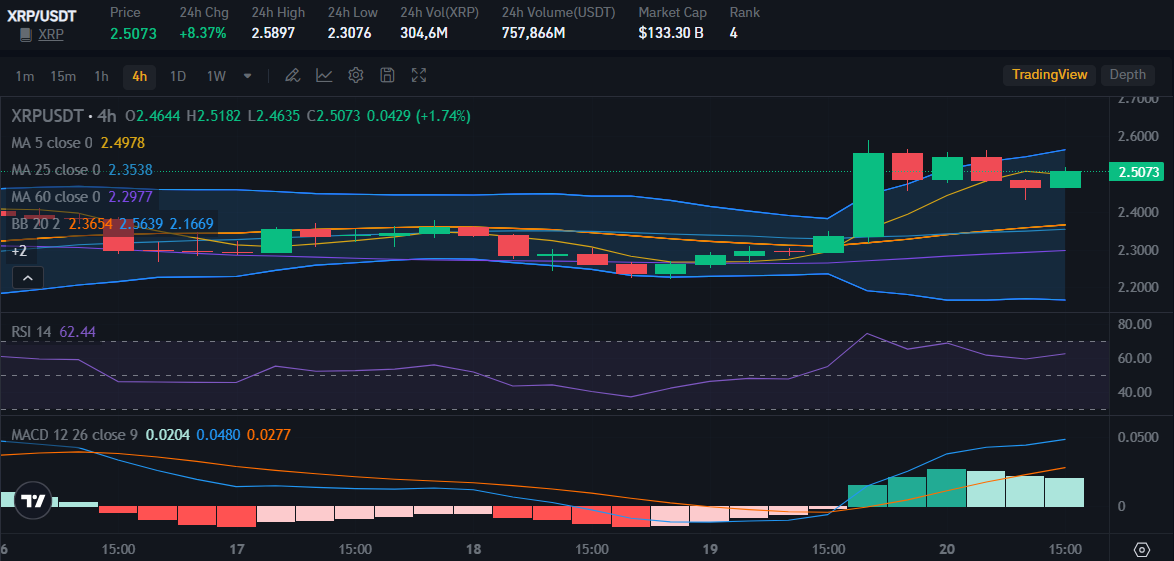
Following the announcement, XRP surged by over 8.37%, reaching a high of $2.5073, according to Bitrue data. The token has already gained more than 200% in recent months, solidifying its status as one of the best-performing digital assets.
The news of the SEC’s withdrawal has also sparked excitement across the crypto community, with industry experts viewing it as a crucial step toward clearer and more favorable regulations for blockchain innovations.
Bitrue’s XRP Staking Pool Offers High Returns
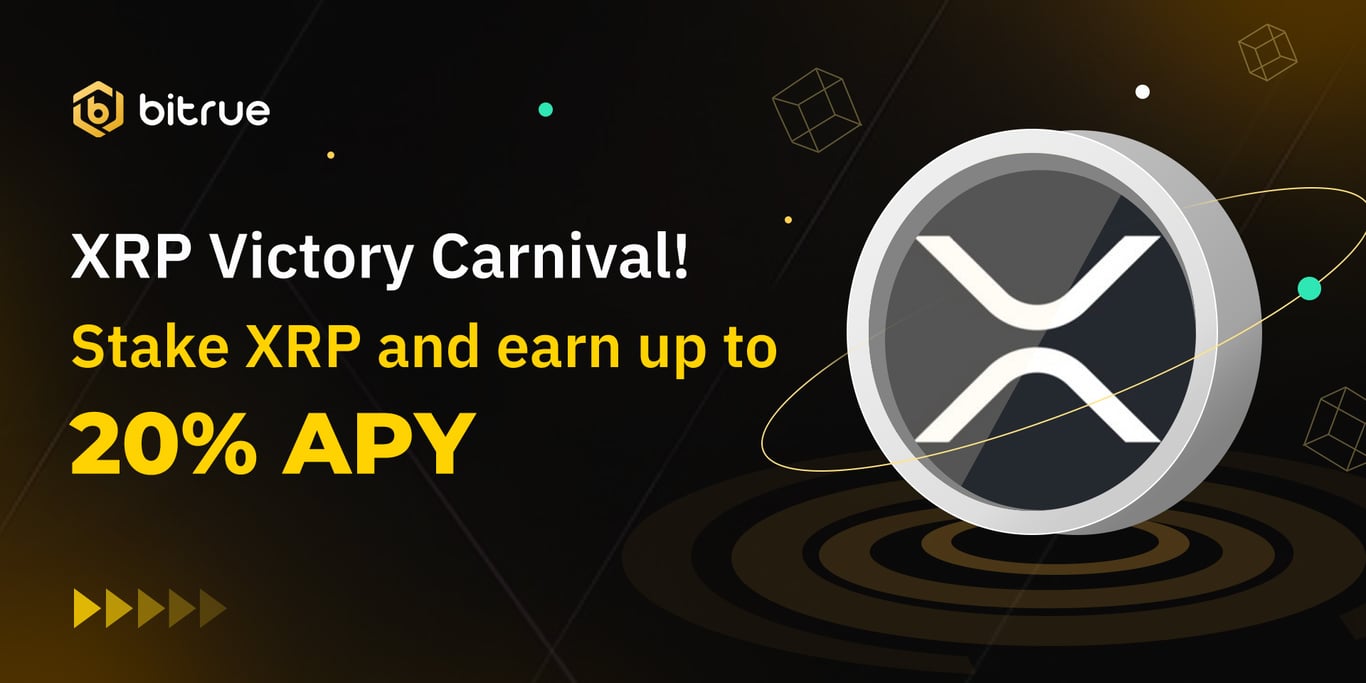
With the renewed optimism surrounding XRP, crypto investors have sought ways to maximize their holdings. One notable opportunity is Bitrue’s XRP staking pool, which offers attractive annual percentage yields (APY) for XRP holders.
- 14-day staking period with 5% APY for existing users.
- 3-day staking period with 20% APY for new users.
- XRP investment in Power Piggy, providing a baseline rate of 1.2% APR, which can be boosted up to 1.4% for BTR holders, with no lockup period and daily interest payouts.
-
XRP can be used as collateral in Bitrue’s Loans service, providing additional flexibility for investors.
-
XRP purchases are available through various payment options, including USD, GBP, and Euros.
-
Futures trading with XRP paired against USDT for those interested in leveraged trading.
Bitrue’s staking pool provides an excellent way for XRP investors to earn passive income while benefiting from the token’s bullish momentum.
Conclusion: A New Era for Crypto Regulation
The conclusion of the Ripple case represents more than just a legal victory—it signifies the end of an era where regulatory uncertainty hindered innovation and investment in the cryptocurrency space.
With Ripple’s victory setting a precedent, the industry has a clearer foundation for growth, increased investment, and broader adoption of blockchain technology worldwide.
As the legal dust settles, Ripple and the XRP community celebrate not just a win for themselves but for the entire crypto industry, paving the way for a more transparent and innovation-friendly regulatory environment.





You must be logged in to post a comment.