by | Mar 11, 2025 | Business
Bitcoin falls below $80,000 amid market turmoil, with investors facing macroeconomic uncertainties and ETF outflows. Will BTC rebound, or is further decline ahead? Explore expert insights on market trends, institutional moves, and key technical indicators shaping Bitcoin’s future.
Bitcoin price dropped below the $80,000 mark on Monday, driven by persistent selling pressure in the equities market. The flagship cryptocurrency fell as low as $77,396.43, its lowest level since November, according to Coin Metrics.
The slump in Bitcoin’s price also impacted crypto-related stocks, with Coinbase declining by 17.6%, Robinhood losing 19.8%, and MicroStrategy, now known as Strategy, dropping more than 16%.
Market Downtrend and Investor Sentiment
Bitcoin exchange-traded funds (ETFs) recorded their fourth consecutive week of outflows, amounting to $867 million last week, bringing the four-week total to $4.75 billion, as per CoinShares.
This continuous bearish sentiment pushed crypto prices even lower over the weekend, with Bitcoin briefly touching the $80,000 level on Sunday evening for the first time since February 28.
President Donald Trump’s recent executive order to establish a U.S. Bitcoin reserve and digital asset stockpile failed to provide the anticipated boost to the crypto market.
Instead, broader macroeconomic uncertainties, including Trump’s indication that a U.S. recession remains a possibility, led to an accelerated market downturn on Monday. Without a specific catalyst to drive a reversal, macroeconomic concerns are expected to continue weighing on cryptocurrency prices.
Investors are keenly watching economic indicators, such as the Job Openings and Labor Turnover Survey (JOLTS), the Consumer Price Index (CPI), and the Producer Price Index (PPI), for further direction.
A 27% Decline from All-Time High
Bitcoin’s fall to $78,000 on Monday represents a 27% decline from its all-time high of $107,000 in January. The combined losses in the crypto and stock markets have erased nearly $6 trillion in market capitalization since the start of the year.
The S&P 500 suffered a staggering $1.4 trillion wipeout on Monday alone, marking its largest single-day loss since 2022.
Investor sentiment has shifted dramatically, with the Fear and Greed Index plummeting to 14, signaling extreme fear. This is a stark contrast to last year when extreme greed dominated following Trump’s election victory.
Analysts at The Kobeissi Letters noted that the market has swung from extreme optimism to extreme pessimism within days, leading to severe price corrections across risk assets.
The Role of Institutional Investors and Derivatives Market
Bitcoin’s decline has also been exacerbated by institutional investors pulling capital from the market.
Digital asset investment products have seen continuous outflows, totaling $4.75 billion in the last month, reducing year-to-date inflows to $2.6 billion. Bitcoin has been the hardest hit, with outflows reaching $756 million last week.
Additionally, the derivatives market has contributed to heightened volatility, with $650.80 million in liquidations in the past 24 hours alone.
Long positions suffered the most, with $595.75 million liquidated, further increasing market supply and exerting downward pressure on prices. Bitcoin and Ethereum saw the highest liquidations, with $264.22 million and $114.76 million, respectively.
Macroeconomic Concerns and Technical Indicators
Trump’s policy stance has introduced uncertainty into the market, particularly regarding trade tariffs on Canada, Mexico, and China.
The recent correction aligns with technical trends, as Bitcoin dipped below the key 200-day Exponential Moving Average (EMA) at $85,722. Momentum indicators such as the Relative Strength Index (RSI) and Moving Average Convergence Divergence (MACD) suggest that further declines may be imminent.
RSI is trending downward, and MACD has flashed red histogram bars under the neutral line, signaling negative momentum.
The Growing Correlation Between Crypto and Equities
Bitcoin’s price movements are increasingly correlated with traditional financial markets. Ruslan Lienkha, Chief of Markets at YouHodler, highlighted that Bitcoin is still perceived as a high-risk asset and tends to react strongly to broader market sentiment.
The crypto market has also responded more to Trump’s tariff policies than his regulatory support for digital assets, further exacerbating the downturn.
The demand for short-dated put options on Bitcoin, Ethereum, and Solana indicates a defensive stance among traders.
The U.S. bond market is signaling a risk-off environment, which has translated into increased selling pressure across multiple asset classes, including crypto.
Conclusion: Can Bitcoin Rebound?
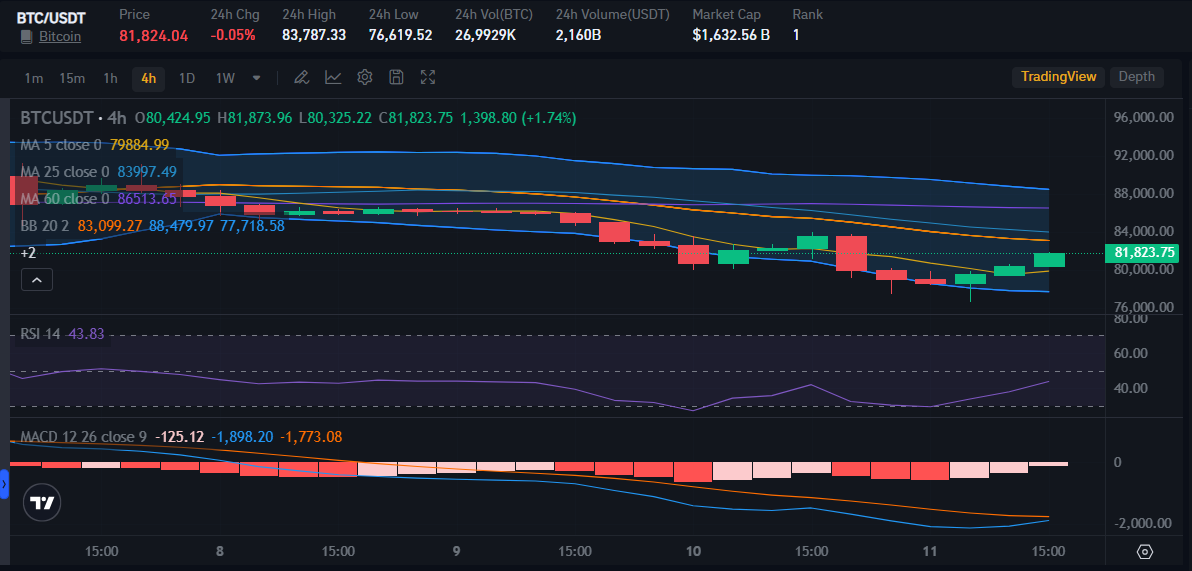
As of this writing on March 11, BTC price has returned to $81,824, but remains bearish with the RSI value still below 50.
Despite the current downtrend, some analysts believe Bitcoin could decouple from traditional markets in the long run. Stabolut CEO Eneko Knorr suggested that while Bitcoin’s correlation with equities affects its short-term trajectory, its long-term outlook remains positive.
For a sustainable recovery, Bitcoin will need positive macroeconomic data and signs of easing inflation. While the creation of a U.S.
Bitcoin reserve could provide temporary support, a meaningful long-term impact would require sustained institutional interest and favorable economic conditions.
As the market navigates through these turbulent times, investors remain cautiously optimistic about Bitcoin’s long-term potential, but the near-term outlook remains clouded by macroeconomic uncertainties and risk-averse sentiment.
by | Mar 11, 2025 | Business
Stay updated with the latest XRP news and price movements as uncertainty around a U.S. strategic crypto reserve impacts market sentiment. Discover key factors driving XRP’s volatility, including SEC legal battles, ETF prospects, and macroeconomic risks. Read more for expert insights on XRP’s future outlook.
The cryptocurrency market continues to witness dramatic shifts, with XRP at the center of recent volatility. After briefly reaching nearly $3, XRP price has now fallen to $2.1375, sparking concerns among investors.
The downturn follows initial enthusiasm over the potential inclusion of XRP in a U.S. strategic crypto reserve, which has since faded.
As market sentiment weakens, analysts present conflicting predictions on XRP’s future, with some anticipating a rebound while others foresee further declines.
XRP Price Decline and Market Reactions
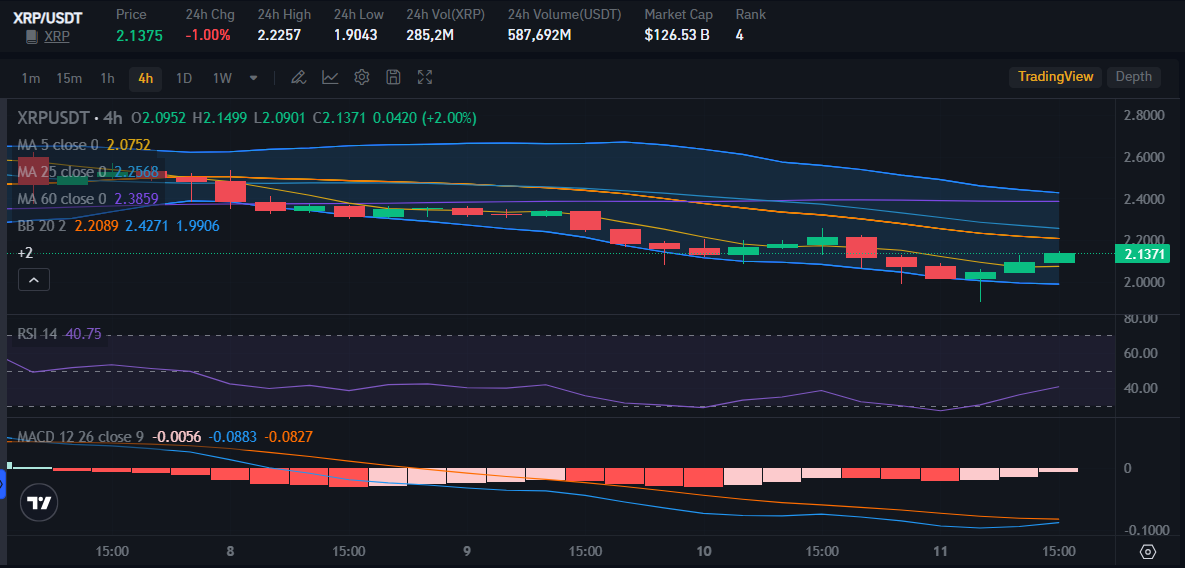
XRP saw a sharp 1% drop today, trading at $2.1375 after briefly surging to $2.93. The initial rally was fueled by former President Donald Trump’s announcement regarding the formation of a U.S. strategic crypto reserve, which reportedly included XRP.
However, skepticism quickly emerged regarding the feasibility of such a reserve, particularly with regard to XRP’s role in institutional holdings.
This skepticism, coupled with growing economic concerns such as new tariffs on Mexico and Canada, has negatively impacted both traditional and crypto markets.
The recent White House crypto summit, attended by key industry figures such as Strategy Chair Michael Saylor, Coinbase CEO Brian Armstrong, and Ripple CEO Brad Garlinghouse, initially brought hope for favorable crypto regulations.
However, investor sentiment soured as critics questioned the government’s involvement in volatile digital assets, particularly in light of the growing national debt.
Some proponents of the strategic reserve idea advocated for a Bitcoin-only approach, further casting doubt on XRP’s inclusion.
Regulatory Developments and Institutional Adoption
Ripple’s ongoing legal battle with the U.S. Securities and Exchange Commission (SEC) remains a pivotal factor in XRP’s price performance. Market participants are closely watching the SEC’s next move, particularly regarding its appeal strategy in the Ripple case.
The SEC has been actively reshaping its stance on crypto enforcement, as seen in its recent case dismissals involving Coinbase, Kraken, and other crypto firms. However, the agency remains silent on its approach to Ripple’s legal proceedings, leading to speculation that a settlement or a dropped appeal may be on the horizon.
Meanwhile, expectations for an XRP exchange-traded fund (ETF) continue to fuel bullish sentiment. JPMorgan estimates that an XRP ETF could attract $8 billion in inflows within its first year of trading.
Such an investment vehicle could provide significant institutional exposure to XRP, further solidifying its position in the crypto market.
XRP Price Trends and Future Outlook
XRP has been on a downward trajectory, declining 16% over the past week to reach $2.16. Broader market risks, including Trump’s shifting stance on the strategic reserve and escalating trade tensions, have exacerbated selling pressure.
On March 9, XRP dropped 8.22%, following a 2.50% decline the previous day, underperforming the broader crypto market.
Key factors influencing XRP’s price outlook include:
1. U.S. Strategic Reserve Asset: A renewed push for a multi-crypto reserve could lift XRP sentiment and drive price recovery.
2. SEC Appeal Strategy: A dropped appeal could push XRP beyond its all-time high of $3.55, while prolonged legal battles could depress prices below $1.50.
3. XRP-Spot ETF Developments: Approval of an XRP-spot ETF could trigger significant institutional inflows, potentially driving the price toward $5. However, continued regulatory hurdles could dampen these expectations.
4. Macroeconomic Risks: Tariff escalations and weaker U.S. economic data could weigh on XRP’s price, while improved market conditions may support a rebound to $2.50 or higher.
Conclusion
XRP remains one of the most closely watched cryptocurrencies, with both bullish and bearish forces shaping its trajectory.
While institutional interest and regulatory clarity could propel XRP to new highs, ongoing legal uncertainties and macroeconomic challenges continue to pose significant risks.
Investors should remain vigilant as the market navigates these developments, with XRP’s future largely dependent on regulatory decisions and broader economic trends.
by | Mar 11, 2025 | Business
Indonesia is rapidly emerging as a prime destination for foreign investments, thanks to its thriving economy and vast business opportunities. However, expanding into this market requires careful consideration, particularly when it comes to choosing the right company type. This article aims to guide foreign entrepreneurs through the process of selecting the most suitable company type for their business expansion into Indonesia.
Understanding the Indonesian Business Landscape
Indonesia’s economy is one of the fastest-growing in Southeast Asia, offering a wealth of opportunities for foreign investors. The country’s large population, rising middle class, and abundant natural resources make it an attractive destination for various industries.
Regulatory Framework for Foreign Businesses in Indonesia
Navigating Indonesia’s regulatory environment is crucial for any foreign business. The country has specific regulations that govern foreign investments, and understanding these laws is essential to ensure compliance and avoid potential legal issues.
Importance of Understanding Local Laws and Cultural Nuances
In addition to legal regulations, it is vital to be aware of Indonesia’s cultural nuances. Building strong local relationships and respecting cultural practices can significantly impact your business success in the region.
Types of Companies in Indonesia
PT (Perseroan Terbatas)
A PT (Limited Liability Company) offers limited liability protection, making it a secure option for entrepreneurs. However, setting up a PT as a foreigner can present challenges, such as restrictions on certain business sectors.
There are two types of PT which only differentiate the ownership of the PT, namely PMDN and PMA.
The PMDN, or Domestic Investment Company, is fully owned by local investors. There is no minimum capital in opening a company and there is no limitation of shareholding composition. This type of company is open for micro, small, medium until large scale companies.
A PMA (Foreign Investment Company) is a name designed for foreign investors. The requirements for setting up a PMA are more stringent, and there may be challenges related to regulatory compliance and sector-specific restrictions. Unlike PMDN, a PMA has a minimum paid up capital of IDR10 billion. Most of the business sectors are opened for foreign ownership since the positive investment list regulation is issued. However, it is worthy to note that few areas may be restricted for foreign ownership and require a joint venture with the local investors.
Representative Offices
A Representative Office is a suitable option for foreign businesses that wish to establish a presence in Indonesia without engaging in commercial activities. While this option has its limitations, such as being unable to generate revenue, it can be an effective way to conduct market research and build local relationships.
Factors to Consider When Choosing a Company Type
Business Goals
Your long-term business goals should play a significant role in determining the most appropriate company type. Consider how each option aligns with your strategic objectives, whether you aim to fully operate in Indonesia or simply establish a presence.
Ownership and Control
Different company types offer varying levels of ownership and control. Understanding these differences is crucial, especially for foreign investors who may face restrictions in certain sectors.
Capital Requirements
Each company type comes with its own capital requirements, which can impact your decision. It’s important to assess the financial implications of each option before making a commitment.
Regulatory Compliance
Compliance with Indonesian laws is essential for any business. Each company type has specific regulatory requirements, so it’s important to choose an option that aligns with your ability to meet these obligations.
Tax Implications
Tax structures vary across different company types. Understanding these differences can help you choose the most tax-efficient option for your business.
Step-by-Step Process for Setting Up Your Chosen Company Type
Legal Documentation
The first step in setting up a company in Indonesia involves preparing the necessary legal documents. These vary depending on the company type and include documents such as the Articles of Association, the identity card of the shareholders, directors, and commissioners.
Registration Process
Once your documentation is in order, the next step is to register your company with the appropriate Indonesian authorities. This process involves several steps, including obtaining a business identification number (NIB) and registering with the Ministry of Law and Human Rights.
Hiring Local Employees
Hiring local talent is an important aspect of establishing your business in Indonesia. Understanding the local labor laws and requirements is essential to ensure compliance and build a strong team.
Opening Bank Account
Opening a bank account can be made after the company is legally incorporated. If the director is a foreigner, then a limited stay permit (KITAS) and work permit is required. Read more on the bank account opening process.
Common Challenges and How to Overcome Them
Navigating Bureaucracy
Indonesia’s bureaucratic processes can be challenging for foreign businesses. Being patient and working closely with local experts can help you navigate these hurdles effectively.
Cultural Differences
Cultural differences can pose challenges when doing business in Indonesia. Understanding and respecting local customs is key to building strong business relationships and avoiding potential conflicts.
Regulatory Changes
Indonesia’s regulatory environment is dynamic, with frequent changes that can impact your business. Staying updated on these changes and seeking professional advice can help you adapt and remain compliant.
Conclusion
Expanding into Indonesia presents numerous opportunities for foreign businesses, but choosing the right company type is critical to your success. By thoroughly understanding the options available and considering factors such as business goals, ownership, and regulatory compliance, you can make an informed decision. Remember to seek professional advice tailored to your specific needs to ensure a smooth and successful expansion into this vibrant market.
FAQs
What are the most common company types chosen by foreigners in Indonesia?
Foreigners often choose PMAs (Foreign Investment Companies) due to the level of ownership and control they offer.
How long does it take to set up a company in Indonesia?
The process can take several days, depending on the company type and the efficiency of the registration process. The process can be longer if the business require a specific business license before legally operates in Indonesia
Can a foreigner fully own a company in Indonesia?
Yes, foreigners can fully own a company in Indonesia through a PMA, although some sectors may have ownership restrictions.
What support is available for foreign investors in Indonesia?
Foreign investors can access various forms of support, including investment advisory services, and partnerships with local businesses.
If you’re considering expanding your business in Indonesia, CPT Corporate provides professionals that can assist you in every step it takes. Contact us to seek professional guidance and have your business expanding come true.
by | Mar 10, 2025 | Business
KUALA LUMPUR, MALAYSIA – March 10, 2025 – Nusantara Global Network is excited to announce a strategic collaboration with Broker Phyntex Markets, a well-known name in the forex trading world, marking a significant step forward in the expansion of their Introducing Broker (IB) program. This partnership will offer traders attractive opportunities, including high self rebate benefits, enhanced trading conditions, and the chance to grow their networks through the structured IB program.
This collaboration represents a substantial opportunity for traders who have long been active in the market and are now considering becoming an IB, or even for those looking to enjoy self rebate on their own trading activities. By joining the program, traders can benefit from self rebates up to 12 USD/lot, across all instruments—FX, gold, and indices. Combined with leverage of 1:5000, these are game-changing advantages designed to empower traders and brokers alike.
“We are thrilled to join hands with Phyntex Markets in providing a robust and rewarding IB program,” said the Head of Nusantara Global Network. “Through this partnership, we can offer traders the benefits of one of the best trading environments, complete with attractive rebates and competitive conditions. This is more than just an alliance; it’s a gateway to new opportunities for traders to expand their influence and earnings.”
Phyntex Markets, which has recently undergone a major restructuring, is making a comeback with a redefined approach and 100% revamped services. The program, targeting both seasoned traders and those aiming to become IBs, is expected to open up a new realm of possibilities within the trading industry.
“This collaboration with Nusantara Global Network represents a commitment to delivering better services, bigger benefits, and stronger networks for our Introducing Brokers,” said a spokesperson from Phyntex Markets. “Our newly enhanced trading platform, coupled with the powerful leverage and rebate structures, gives IBs a clear path to success in today’s fast-paced trading environment.”
A Clear Path to Success with Nusantara and Phyntex
The IB program focuses on supporting and incentivizing traders who are interested in growing their brokerage networks. The self rebate system is especially appealing, as it provides a substantial boost to income for every lot traded. This system is not limited to just forex but includes gold and indices, making it a comprehensive offering for traders across various markets.
With Phyntex Markets offering state-of-the-art trading tools and platforms, including MT4 and MT5, alongside advanced features like CopyTrade, MAMM, and PAMM, IBs will have access to an extensive range of solutions that cater to their clients’ needs. Whether focusing on new client acquisition or maximizing returns for themselves, the Phyntex Markets IB program presents a robust framework for achieving success.
About Phyntex Markets
Phyntex Markets is a globally recognized forex and CFD broker, known for providing traders with competitive spreads, high leverage, and advanced trading platforms. After a successful restructuring, Phyntex Markets has returned stronger than ever, offering enhanced services to cater to traders’ evolving needs in the global market.
by | Mar 10, 2025 | Business
KUALA LUMPUR, MALAYSIA – March 10, 2025 – Nusantara Global Network is pleased to announce an exciting new partnership with Phyntex Markets, a leading name in the global forex trading industry. This collaboration marks a new era for Introducing Brokers (IBs) looking to enhance their earnings, enjoy high self rebate offers, and provide their clients with cutting-edge trading conditions.
For traders who have long been active in the financial markets and are now exploring the potential of becoming an IB, this partnership offers a compelling opportunity. Phyntex Markets provides a self rebate of up to 12 USD per lot on all instruments, including FX, gold, and indices, coupled with leverage up to 1:5000. This collaboration is designed to attract both seasoned traders and newcomers eager to take advantage of Phyntex’s newly restructured and improved services.
“We are delighted to partner with Phyntex Markets to bring forward this exciting IB program,” said a spokesperson for Nusantara Global Network. “The competitive self rebates, robust trading platforms, and enhanced trading conditions that Phyntex Markets now offers will create excellent opportunities for both traders and IBs.”
Phyntex Markets has undergone a comprehensive restructuring, bringing a modernized approach to its services, making it a top choice for traders worldwide. This partnership aims to benefit both Nusantara’s established network and Phyntex’s newly revamped offerings. By leveraging this collaboration, IBs will not only maximize their earnings but also grow their clientele through Phyntex’s extensive product offerings and competitive trading conditions.
“The collaboration with Nusantara Global Network is part of our commitment to providing top-tier services and competitive incentives for our IBs,” said representative from Phyntex Markets. “We have reimagined the way we deliver our services, ensuring that IBs and their clients can benefit from the best trading conditions, self rebates, and the security of our well-established platforms.”
Expanding Horizons for Introducing Brokers
The Phyntex Markets IB program is tailored to help IBs grow their networks while providing a substantial return on every trade. The self rebate structure is designed to reward IBs significantly for every lot traded by themselves or their clients, extending across all key trading instruments. This, combined with an attractive 1:5000 leverage and Phyntex’s cutting-edge trading tools, offers IBs the perfect platform to grow their business.
Additionally, Phyntex Markets offers traders the use of advanced platforms, including MetaTrader 4 (MT4) and MetaTrader 5 (MT5), as well as features like CopyTrade, MAMM, and PAMM, ensuring IBs and their clients enjoy superior trading experiences with all the tools they need for success.
About Phyntex Markets
Phyntex Markets is a globally recognized forex and CFD broker, offering traders some of the most competitive spreads and trading conditions in the industry. Recently restructured, Phyntex Markets is back stronger than ever, with improved services aimed at enhancing the trading experience for clients worldwide.
by | Mar 10, 2025 | Business
KUALA LUMPUR, MALAYSIA – March 10, 2025 – Nusantara Global Network is thrilled to unveil a new collaboration with Phyntex Markets, aimed at revolutionizing the Introducing Broker (IB) landscape. This partnership opens up lucrative opportunities for traders looking to earn self rebates and build long-term relationships with clients through an enhanced trading experience.
For traders with years of experience in the financial markets or those considering a shift towards becoming an IB, Phyntex Markets offers an irresistible value proposition. With self rebates up to 12 USD per lot and leverage as high as 1:5000, Phyntex Markets presents an outstanding opportunity for traders to maximize their earnings while providing superior services to their clients.
“This collaboration with Phyntex Markets represents a game-changer for the Introducing Broker community,” stated a representative from Nusantara Global Network. “We believe the benefits offered, including top-tier rebates and leverage options, will attract serious traders looking to boost their profitability.”
Phyntex Markets, after undergoing a significant restructuring process, is back stronger than ever, offering cutting-edge solutions that cater to both traders and Introducing Brokers. The collaboration is set to empower IBs with a powerful toolkit, helping them enhance their performance and grow their networks exponentially.
“We are excited to join forces with Nusantara Global Network in providing a first-class IB experience,” said a spokesperson from Phyntex Markets. “Our enhanced offerings, including self rebates and competitive trading conditions, will be instrumental in driving growth for both IBs and their clients.”
A Wealth of Benefits for Introducing Brokers
Through this partnership, Nusantara Global Network aims to provide IBs with an unmatched platform for growth. By collaborating with Phyntex Markets, IBs can benefit from self rebates across all trading instruments, including forex, gold, and indices. The high leverage of 1:5000 combined with Phyntex’s commitment to offering tight spreads and fast execution creates a powerful environment for IBs to thrive.
In addition, Phyntex Markets offers a robust suite of trading tools, including MetaTrader 4 (MT4), MetaTrader 5 (MT5), and advanced features like MAMM and PAMM systems, ensuring a seamless trading experience for both IBs and their clients. Whether traders are new to the market or experienced professionals, Phyntex’s platforms cater to all levels of expertise, allowing IBs to support a diverse client base.
About Phyntex Markets
Phyntex Markets is an international forex and CFD broker, recognized for its competitive trading conditions and client-centric approach. With a focus on providing value to traders, Phyntex Markets has emerged from its restructuring with improved offerings designed to deliver superior trading experiences across global markets.





You must be logged in to post a comment.